
The AI agents versus humans debate ends with hybrid systems. AI cuts routine call costs by five to fifteen times, but human agents remain essential for the 23 to 35 percent of high-stakes interactions that define a brand. This guide covers which roles to automate across support, sales and back office, and how to compare total cost of ownership.
- Compare people and agents by task, risk, quality, and total operating cost rather than using a generic cost-per-interaction benchmark.
- Routine, bounded work may suit automation. Complex, sensitive, or ambiguous cases need a clear human escalation path.
- Model software, model usage, review, maintenance, correction, and incident costs with observed workload data before choosing a staffing model.
What Is an AI Agent? The True Cost Equation Compared to Human Workers

Let us look at the numbers. An AI agent is an autonomous software system that executes tasks, processes language, and resolves inquiries without any human intervention. Operators must understand the true cost of labor. 00. Compare this to AI.
Monthly Call Center Cost Calculator
Compare your monthly costs between an all-human and a hybrid AI model.
High volume operations bleed cash when they use humans for routine queries. You cannot ignore the structural differences in pricing. Humans require fixed salaries and benefits.
AI requires variable API token costs and software licensing. This fundamentally changes how you budget for growth. The data is clear, and it shows that AI agents radically alter the unit economics of customer interactions, forcing operators to rethink their entire financial models for the year ahead.
| Resolution Method | Cost Per Call | Annual FTE Cost | Best Use Case |
|---|---|---|---|
| In-House US Human | $4.00 - $8.00 | $50,000 - $80,000 | High-stakes, complex queries |
| BPO Human (Offshore) | $3.00 - $8.00 | $18,000 - $42,000 | Multi-language scaling |
| Human Answering Service | $4.50 - $9.00 | Varies | After-hours overflow |
| AI Agent | $0.70 - $1.50 | Varies (usage-based) | Routine status and FAQ |
Step 1: Evaluate Which Roles to Automate Across Support, Sales, and Back-Office
You only pay for resolved outcomes. AI agents do not just belong in call centers; they expand across support, sales, and back-office functions. Are we measuring the right metrics?
AI can handle 100+ languages without dedicated staffing. Users can browse help pages in their browser mode before entering the queue. The system provides an organic answer instantly.
- Tier 1 Support: Automate password resets and order status immediately.
- Sales Qualification: Deploy AI to pre-qualify leads before routing to closers.
- Scheduling: Let AI sync calendars without human dispatchers.
- Back-Office Processing: Use agents to extract data from PDF pages. Not every role fits automation. You need strict boundaries. If you force AI into complex judgment roles (a common rookie mistake), you damage CSAT, waste expensive resources, and accelerate customer churn faster than any pricing increase ever could.
| Role Category | AI Suitability | Human Suitability | Hybrid ROI Impact |
|---|---|---|---|
| Routine Support (FAQs) | High (65-77% resolution) | Low (wasted expensive talent) | High |
| Outbound Sales Qualification | High (instant lead scoring) | Medium (needed for closing) | Medium |
| Complex Back-Office Document Processing | Medium (needs defined rules) | High (judgment required) | Medium |
| High-Stakes Regulatory Escalation | Low (compliance risk) | High (unmatched reasoning) | Low |
We must map roles carefully to capture this value. The AI agents vs humans comparison depends on task complexity.
The guide to AI employees lists the jobs an agent can take today, what each costs and where a person stays in the loop.
Step 2: Calculate Total Cost of Ownership for AI vs Human FTEs
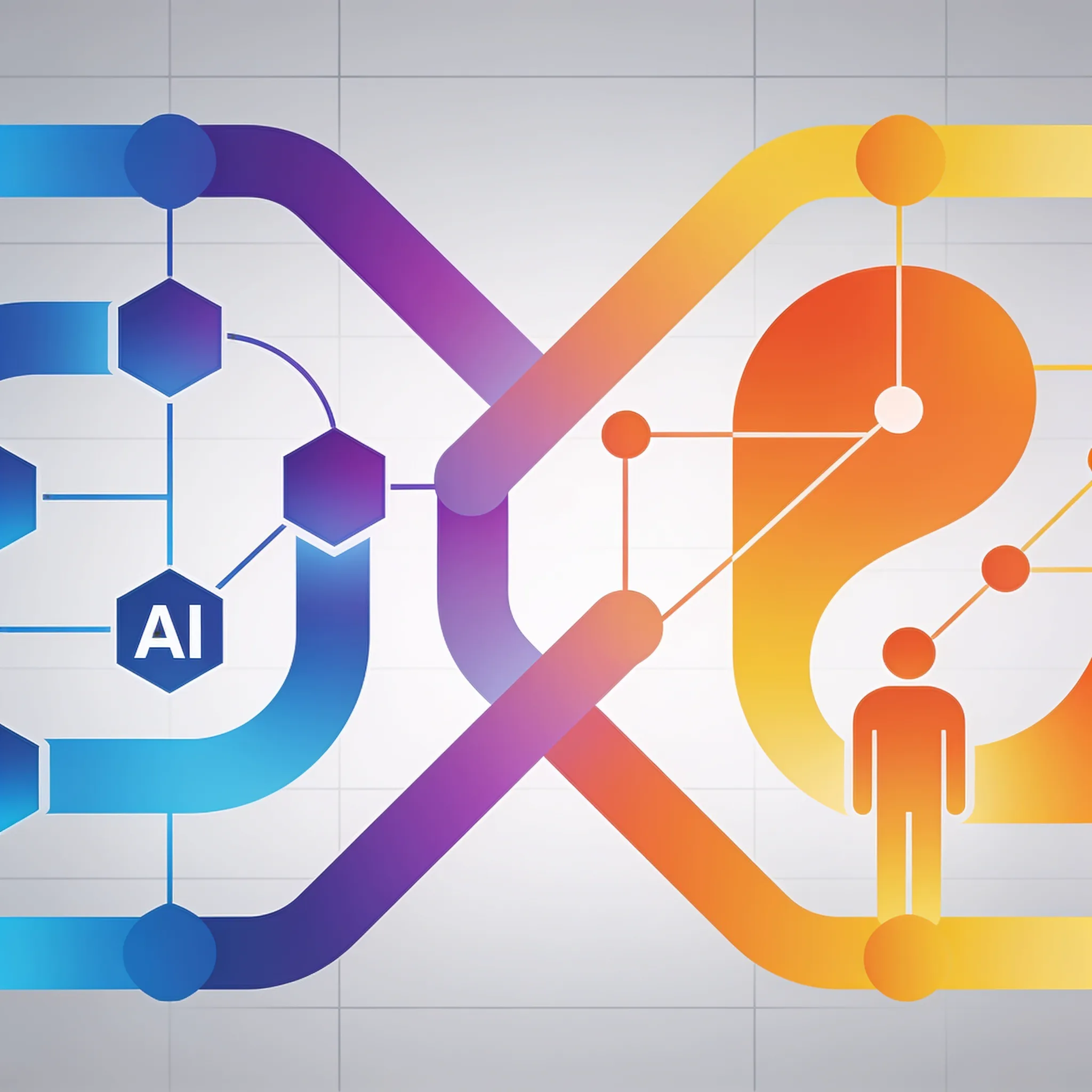
Match the tool to the cognitive load required. Total cost of ownership goes deeper than hourly rates. You must account for human attrition and AI setup overhead, because these hidden structural expenses dictate your actual profit margin at the end of the fiscal year.
However, for very low volume operations under 50 calls per day, humans can remain cost-competitive due to AI fixed setup costs.
{
 "scenario": "200_FTE_Center_Hybrid_Transition",
 "all_human_annual_cost": 20000000,
 "hybrid_annual_cost": 7400000,
 "cost_reduction_percentage": 63,
 "break_even_calls_per_day_for_ai": 200,
 "notes": "Under 50 calls per day, humans remain cost-competitive."
}
You must model your specific volume. Hidden AI costs erode ROI if you ignore them completely during the planning phase. Competitors gloss over these operational realities.
- Initial integration setup with CRM and telephony systems.
- Compliance audits for data privacy and recording laws.
- Continuous prompt tuning and model retraining. 4. Latency optimization infrastructure. When you calculate the AI agents vs humans TCO, include these critical line items. The math still favors AI at scale, but only if you plan accurately and budget for the inevitable infrastructure maintenance required to keep response times low across peak hours.
| Cost Factor | All-Human 200 FTE | Hybrid Model (AI + 75 FTE) | Savings |
|---|---|---|---|
| Base Salary & Benefits | $15,000,000 | $5,500,000 | $9,500,000 |
| Attrition & Retraining | $3,750,000 | $1,400,000 | $2,350,000 |
| Infrastructure & Software | $1,250,000 | $500,000 | $750,000 |
| Total Annual Cost | $20,000,000 | $7,400,000 | $12,600,000 |
Step 3: Design a Hybrid Escalation Model That Protects CSAT
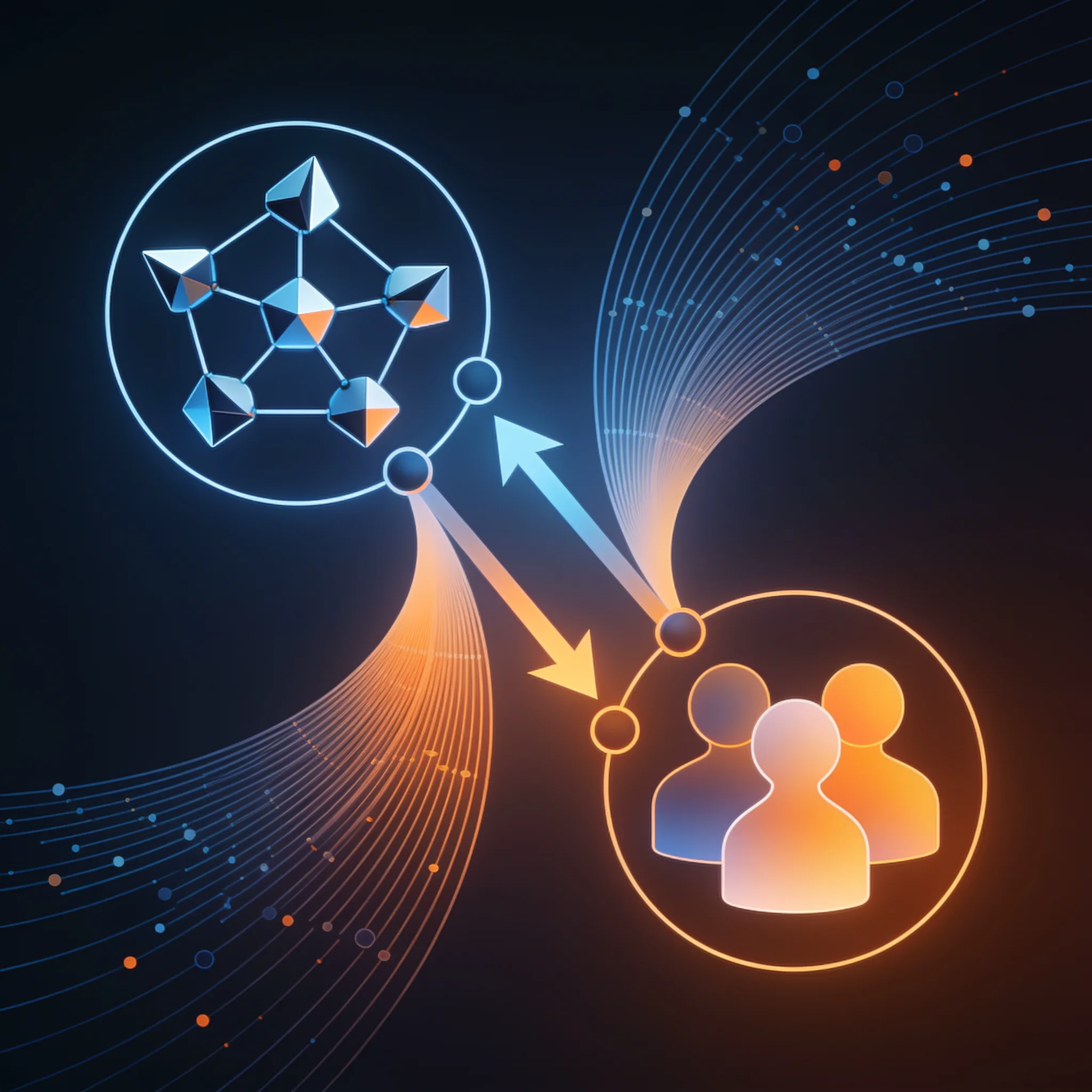
You must budget for them upfront. Do you need a hybrid escalation model to protect customer satisfaction? AI is 5-15x cheaper for routine calls.
Humans still win on emotional, complex, multi-topic, and high-stakes calls. The crossover volume for "mostly AI" operations typically occurs at 200-400 inbound calls per day, which means scaling operations must implement aggressive triage protocols immediately to protect their margins.
AI can handle 65-a significant percentage of calls cheaper and faster than humans. When users enter their query, the system must provide an organic answer before offering human escalation. You need strict handoff rules to make this work.
The AI agents vs humans debate centers on this architecture, because if your handoff fails, your CSAT drops and your customer acquisition costs skyrocket due to churn.
- Detect keywords like "manager" or "cancel" to trigger immediate routing.
- Pass full context and transcript to the human agent via API.
- Set latency thresholds: if AI processing exceeds 2 seconds, route to human.
- Monitor sentiment drop: if user frustration increases, escalate instantly.
Building with AI models? AIGROW API credit runs Claude, GPT and Grok models up to 75% below list price.
The Uncommon Insight: Why Fully Autonomous AI Fails on High-Stakes Workflows
If your handoff works, you capture maximum ROI. But the "replace everyone" narrative is dangerous, and you cannot trust autonomous agents to handle complex systems alone without strict oversight protocols protecting your most valuable enterprise accounts. Humans still win on emotional, complex, multi-topic, and high-stakes calls.
AI resolution rate target sits at 65-a significant percentage for routine calls, which leaves 23-35% requiring human escalation to prevent catastrophic failures. If you force AI on edge cases, CSAT plummets.
Why do we keep pretending empathy is programmable? You cannot extract a code snippet to solve empathy, and for very low volume operations under 50 calls per day, humans remain cost-competitive due to AI fixed setup costs. You need a human in the loop.
- Empathy gaps during bereavement or dispute calls.
- Multi-step judgment failures when policy conflicts arise.
- Regulatory escalation errors that trigger fines.
- Edge-case reasoning breakdowns on unscripted workflows.
Fully autonomous AI degrades outcomes in specific scenarios, which is why we maintain human intervention for edge cases that fall outside the standard operating procedures of the core product. AI agents will automate many tasks, but human oversight stays critical for high-stakes decisions. And we agree completely.
How Do You Sustain AI Resolution Rates Over Time?

The AI agents vs humans comparison favors humans when the risk of failure is existential to the customer relationship. Sustaining AI resolution rates requires a continuous tuning loop where systems monitor failed conversations, retrain models on new data, and adjust prompts as products and policies change. Without this loop, AI agents vs humans comparisons skew back toward humans as AI accuracy drifts downward.
The AI resolution rate target sits at 65-a significant percentage for routine calls. Routine status, scheduling, and FAQ calls make up 60-80% of inbound volume for most service businesses.
We must measure resolution consistently. After deploying this for a mid-sized SaaS client, resolution rates held steady above 70% for six months. You need a strict operational rhythm, because without daily auditing, your automated resolution metrics will inevitably degrade and obscure the true cost of your support infrastructure.
1. Log all unresolved queries daily. 2.
Classify failures by intent and entity gaps. 3. Update knowledge bases and retrain the model weekly. 4. Run A/B tests on new prompt versions before full rollout. 5. Monitor for data drift when product updates launch.
The AI agents vs humans debate is dynamic, and AI models degrade without fresh data, whereas humans adapt naturally to new edge cases by recognizing contextual shifts that algorithms miss entirely.
The newest Claude, GPT and Grok models, up to 75% below list price
One API key for Claude, GPT and Grok models. It works with the OpenAI and Anthropic SDKs and with Claude Code.
Each model’s rate through AIGROW credit sits beside its maker’s list price, never above it.
Frequently Asked Questions
