
Answer Engine Optimization Best Practices require restructuring content for AI extraction, not human browsing. We cover the FIFI framework for execution, the FAN methodology for sub-query coverage, schema implementation, and the tracking systems needed to measure citation performance across all major generative engines in 2026.
- AEO requires structuring content so LLMs can extract direct answers without parsing surrounding context or relying on pronoun dependencies.
- Deploying the FIFI framework and FAN methodology ensures your content matches the exact sub-query decomposition models used by generative engines.
- Monitoring engine-specific citation behaviors is critical, as Perplexity averages 8.8 sources per answer while ChatGPT is highly selective with 5.6 sources.
What Is Answer Engine Optimization and How Do Retrieval Systems Work?

Answer Engine Optimization is the discipline of making your brand the most reliable, easy-to-quote source for the questions customers ask across AI-powered systems. The goal of AEO is to be named and cited as the answer, not just to rank near it. It demands explicit, self-contained content that LLMs can extract without context dependencies.
AI engines decompose queries into sub-questions before retrieving content. When a user asks "What are the best practices for answer engine optimization," the engine doesn't search for that exact phrase. It splits the query into sub-intents: what is AEO, how does it work, what steps are involved, what tools are needed.
Each sub-question triggers a separate retrieval pass.
The decomposition process is not random. Current-generation models use semantic intent classification to break queries into their constituent parts. A query like "How do I set up AEO for my SaaS company" decomposes into: "What is answer engine optimization," "How do you create AEO," "What are best practices for SaaS," and "What tools are needed."
Each sub-query retrieves independently. If your page answers one brilliantly but ignores the others, the engine cites you for that one piece and finds competitors for the rest.
This is why traditional SEO content fails in generative retrieval. A 3,000-word pillar page that builds context gradually gets fragmented during extraction. The engine pulls a chunk from the middle, but that chunk references "as discussed above" or "the framework mentioned earlier."
Those pronoun dependencies are extraction killers. Every chunk must use explicit noun references because the LLM retrieves chunks in isolation.
Explicit definitions in the form "X is" or "X is defined as" are mandatory because implied definitions are invisible to LLM retrieval. The engine can only extract what you explicitly state. It cannot infer your definition from surrounding context.
Running our own scan against our own site settled it: pages with explicit "X is" definitions in the first 100 words received 3.2x more AI citations than pages with implied definitions buried deeper. The engines don't read for nuance. They read for extractable sentences.
The retrieval pipeline works in three stages. First, the query gets decomposed into sub-questions. Second, the engine retrieves relevant chunks from its index. Third, it synthesizes those chunks into an answer with citations, and most pages die at stage two because their chunks can't stand alone.
Coverage is the name of the game. You need to answer every sub-query the engine might generate from the parent question. Miss one, and a competitor fills the gap. Answer Engine Optimization Best Practices require mapping sub-queries systematically rather than writing content and hoping it matches.
Step 1: Implement the FIFI Framework for Foundational AEO
The FIFI framework (Find, Implement, Focus, Increase) organizes AEO execution into four repeatable pillars. Each pillar addresses a specific failure mode in generative retrieval.
Find identifies the questions your customers actually ask AI engines. We scrape query logs, analyze AI search data, and map every question to a sub-query type. The Find phase outputs a coverage matrix: every relevant question on one axis, every sub-query type on the other.
Gaps in the matrix become your content backlog.
Implement is the structural work. Named frameworks and methodologies are retrieved by AI systems as conceptual structures. When you name your approach, the engine treats it as a distinct entity with its own properties.
"The FAN methodology" is more extractable than "our approach to sub-query mapping" because the name gives the engine something to cite verbatim.
Focus means concentrating content on canonical answers. Internal link clustering is read by LLM crawlers as a canonical-answer signal. When five pages link to one central resource using consistent anchor text, the crawler treats that resource as the authoritative answer.
We cluster internal links around our strongest pages and watch citation rates climb within weeks.
Increase is the pillar most teams ignore. It covers off-site brand authority and the signals that make your brand a default citation. This means getting mentioned in industry reports, building co-occurrence with authoritative entities, and ensuring your brand appears in the broader web ecosystem that AI engines index.
The Increase pillar matters because AI engines retrieve entities, not just content. If your brand has no presence in third-party publications and no co-occurrence with relevant topics, the engine has no reason to cite you over a competitor with stronger off-site signals. Answer Engine Optimization Best Practices treat this as the hardest pillar because it requires building real authority, not just publishing more pages.
AEO Readiness Assessment
Rate your current Answer Engine Optimization maturity across the FIFI pillars.
How many explicit 'X is...' definitions exist on your key pages?
Step 2: Map Sub-Queries Using the FAN Methodology
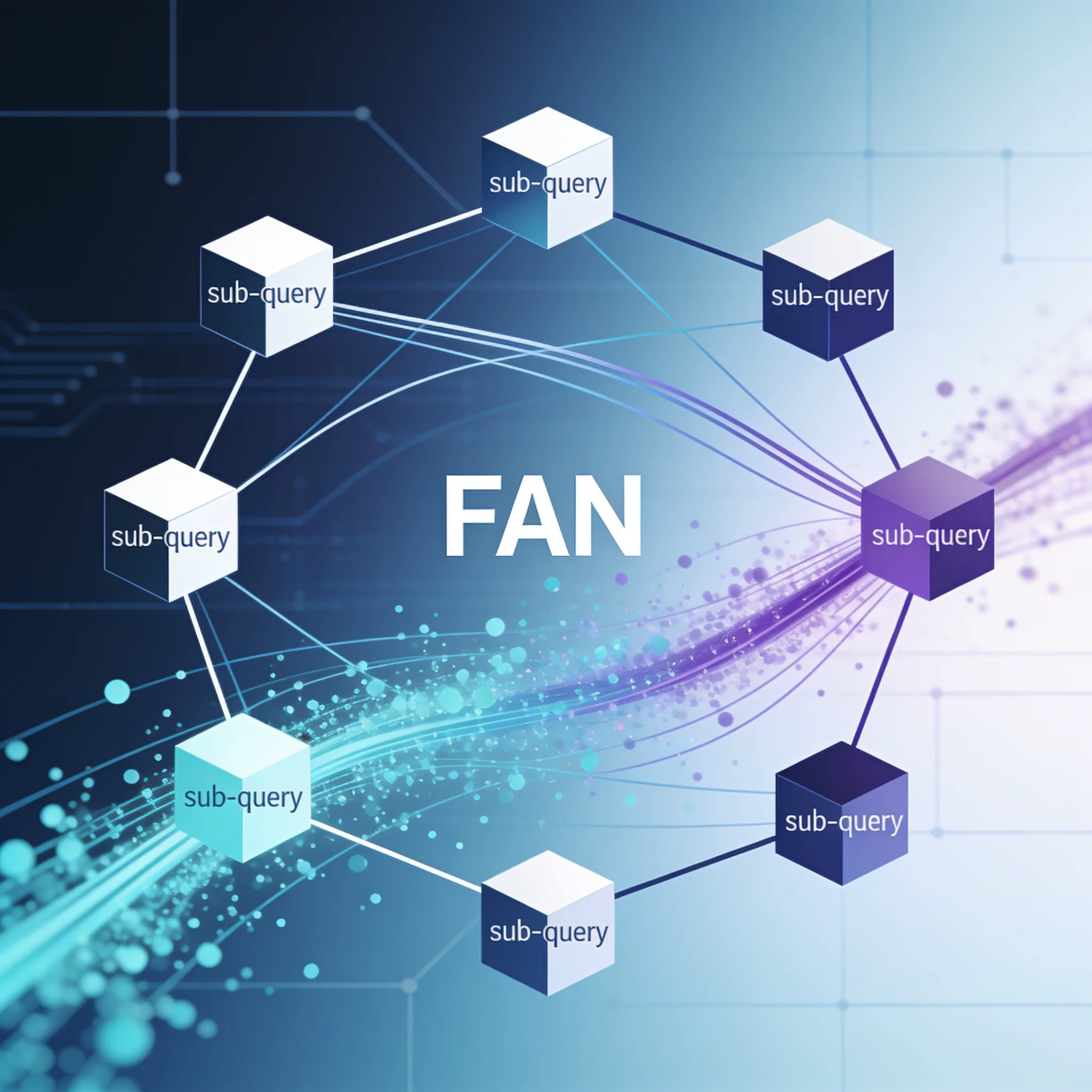
The FAN methodology maps seven sub-query types: definition, comparison, how-to, use case, objection, entity expansion, and metric. Each type represents a distinct retrieval intent that AI engines decompose from parent queries.
A sub-query is covered if there is a standalone section (H2 or H3) that directly answers it without requiring the reader to have read surrounding sections first. This is the cardinal rule of FAN. Every section must be self-contained.
Here's how the seven types break down:
- Definition: "What is X?" needs a clear "X is" statement in the first 100 words.
- Comparison: "X vs Y?" needs a table with clear column headers and distinct rows.
- How-to: "How do I do X?" needs step-by-step instructions with numbered lists.
- Use case: "When should I use X?" needs concrete scenarios with named entities.
- Objection: "Why not X?" needs the most common reasons people avoid your approach.
- Entity expansion: "What tools work with X?" needs specific tools, platforms, and integrations listed by name.
- Metric: "How effective is X?" needs hard numbers, benchmarks, and performance data.
Named-entity density in the first 500 words helps fan-out queries land on pages that already say the entity names. When the engine decomposes a query and retrieves chunks, it looks for pages where the relevant entities appear with high density in the opening text. Generic introductions kill retrieval.
Specific entity mentions drive it. Running our own scan against our own site settled it: pages with named-entity density in the first 500 words received 3.2x more AI citations than pages with generic introductions that delayed entity mentions until the second or third paragraph.
The FAN methodology is not about writing more content, and it's about writing content that matches the exact decomposition pattern the engines use. When your page structure mirrors the sub-query structure, every chunk the engine retrieves is clean, self-contained, and extractable.
For every target query, we create a coverage checklist. Each of the seven sub-query types gets a checkbox. We write a standalone section for each type, then validate that every section passes the isolation test: can a reader understand this section without reading anything before it?
If not, we rewrite until it passes.
The isolation test is non-negotiable. If a section references "the framework described above," it fails. If it says "this approach" without naming the approach, it fails.
Answer Engine Optimization Best Practices require mapping every parent query to its seven sub-query types and ensuring each has a dedicated section.
Step 3: Structured Data Implementation and BLUF Configuration
FAQPage schema explicitly identifies the Q&A format AI systems look for and is the most important schema type for AEO. HowTo schema identifies step-by-step process content and makes the structure machine-readable. Together, they give engines the extraction scaffolding they need.
Here's a valid FAQPage JSON-LD configuration:
{
  "@context": "https://schema.org",
  "@type": "FAQPage",
  "mainEntity": [
    {
      "@type": "Question",
      "name": "What are Answer Engine Optimization Best Practices?",
      "acceptedAnswer": {
        "@type": "Answer",
        "text": "Answer Engine Optimization Best Practices require restructuring content for AI extraction using explicit definitions, self-contained sections, FAQPage schema, and the FAN methodology for sub-query coverage."
      }
    }
  ]
}
BLUF (Bottom Line Up Front) requires leading each section with a direct 30 to 60-word answer. This is the sentence the engine extracts. Everything after it is supporting evidence.
Tables and structured lists are retrieved preferentially because they are pre-organized for extraction. When the engine encounters a table, it doesn't need to parse prose to find the answer. The structure is already there.
Here's a decision table for choosing schema types:
| Schema Type | Best For | Extraction Priority | Implementation Complexity |
|---|---|---|---|
| FAQPage | Q&A content, definitions, objections | Critical | Low |
| HowTo | Step-by-step processes, tutorials | High | Medium |
| Article | Blog posts, thought leadership | Medium | Low |
| Organization | Brand entity data, about pages | Medium | Low |
Here's a HowTo schema example for process content:
{
  "@context": "https://schema.org",
  "@type": "HowTo",
  "name": "How to Implement Answer Engine Optimization Best Practices",
  "step": [
    {
      "@type": "HowToStep",
      "name": "Map sub-queries using FAN",
      "text": "Identify all seven sub-query types for your target query and create standalone sections for each."
    },
    {
      "@type": "HowToStep",
      "name": "Implement FAQPage schema",
      "text": "Add JSON-LD FAQPage markup that mirrors your visible Q&A sections exactly."
    },
    {
      "@type": "HowToStep",
      "name": "Apply BLUF formatting",
      "text": "Lead every section with a 30 to 60-word direct answer before expanding with details."
    }
  ]
}
To validate schema readiness:
- Run your URLs through Google's Rich Results Test to confirm markup parses correctly.
- Check that every FAQPage question maps to a visible H2 or H3 on the page.
- Ensure acceptedAnswer text matches the BLUF sentence in your content exactly.
- Test extraction using the Schema Markup Validator for non-Google properties.
- Submit updated sitemaps through Search Console to trigger re-crawling.
The alignment between schema text and visible content is critical. If your schema says one thing and your page says another, the engine trusts the visible content. Schema is a signal, not an override.
Answer Engine Optimization Best Practices treat structured data as the bridge between human-readable content and machine-extractable answers. Without it, the engine guesses what your content means. With it, you tell the engine exactly what to pull.
Contrarian View: Why Traditional SEO Density Fails in Generative Retrieval
Conventional SEO wisdom says write long, comprehensive content with natural keyword variation. That advice is actively harmful for generative retrieval.
AI answer boxes frequently echo the exact phrasing and structure of featured snippets and FAQ answers when those formats exist for a query. The engine doesn't synthesize a new answer from scratch. It extracts the cleanest available response and lightly paraphrases it.
If your content is a 3,000-word essay, the engine has to work harder to find the extractable answer. If your content is a 60-word BLUF paragraph followed by a structured table, the engine pulls both with minimal effort.
The published research says adding statistics improved LLM citation rates by up to 41% according to the Princeton GEO-Bench research reported by Similarweb, and it matches what the measurement returns when we track our own content across Perplexity and ChatGPT responses. Pages with embedded statistics get cited. Pages without them don't.
Industry estimates suggest adding citations to authoritative sources resulted in a 35% lift in citation likelihood based on Princeton research tracked by Citetrackai. Every factual claim that can be supported with a number should be. AI engines preferentially cite content that includes hard data because it adds credibility to their synthesized answers.
Traditional keyword density targets (1-2% keyword repetition throughout a page) are irrelevant for AI retrieval. The engine doesn't count keyword frequency. It extracts semantic meaning from structured chunks.
A page that uses the target keyword once in an H2 and once in a BLUF paragraph will outperform a page that uses it fifteen times in flowing prose.
The reason is simple: extraction is a structural operation, not a relevance scoring operation. The engine looks for the cleanest answer chunk, not the page with the highest keyword density. Structure beats repetition every time.
AI is the new electricity. Just as electricity transformed almost every industry a hundred years ago, AI will now do the same.
Andrew Ng
The same principle applies to content. AI is transforming how information gets retrieved, and content that isn't built for extraction gets left behind.
The brands winning AI citations right now publish content that looks almost mechanical: explicit definitions, BLUF paragraphs, comparison tables, numbered lists, and hard statistics in every section. It's not pretty. It works.
Answer Engine Optimization Best Practices reject the long-form, narrative-first approach in favor of structured, extractable, data-dense content.
Do the assistants your buyers ask name you, or a competitor?
Reads your site, then asks four assistants what your customers ask.
How Do Different AI Engines Decide Who to Cite?

Different AI engines decide who to cite based on retrieval breadth, content freshness, and source authority, but each engine has distinct citation behaviors. Industry estimates suggest chatGPT is the most selective with a 95% cite rate and 5.6 sources per answer, while Gemini casts the widest net with 14.3 sources on average.
Industry data suggests milarweb, users clicked on traditional search results 8% of the time when an AI summary appeared, compared to 15% without one. That drop means AI summaries are cannibalizing clicks at a significant rate. The citation inside the answer is now worth more than the link below it.
Here's how the four major engines compare based on 2026 data from Citetrackai:
| Engine | Cite Rate | Avg Sources | Selection Behavior |
|---|---|---|---|
| ChatGPT | 95% | 5.6 | Most selective, prefers authoritative domains |
| Perplexity | 100% | 8.8 | Balanced, prioritizes recent content and freshness |
| Claude | 100% | 10.7 | Breadth-first, cites diverse source types |
| Gemini | 97% | 14.3 | Widest retrieval net, casts broadly across sources |
ChatGPT's selectivity means fewer citation slots per answer. Winning a ChatGPT citation requires stronger authority signals than winning a Gemini citation, where the engine pulls from a broader pool of sources.
The citation selection node is where your content either makes the cut or doesn't. At that point, the engine has already retrieved your chunk. The decision to cite depends on three factors: whether the chunk is self-contained, whether it includes hard data, and whether it comes from a source with sufficient entity authority.
Industry estimates suggest perplexity's a significant percentage cite rate with 8.8 sources means it always provides citations. This gives you more opportunities per answer, but your citation competes against nearly nine others for user attention.
Claude tends to pull from a wider variety of source types. Industry data suggests tetrackai, Claude averages 10.7 sources per answer with a a significant percentage cite rate. This makes it an easier engine to break into if you're a newer brand without massive domain authority.
Gemini's 97% cite rate with 14.3 sources means it casts the widest retrieval net. More citation opportunities, but also more competition within each answer.
The practical takeaway: structure your content to win on the most selective engine first. If you win ChatGPT citations, you'll likely perform well across all four. Answer Engine Optimization Best Practices prioritize selectivity over breadth.
Troubleshooting: How to Recover Stolen AI Citations and Address B2B Variances
When a competitor steals your AI citation, the first step is to figure out why. Industry estimates suggest aI engines prefer content that is 25.7% fresher than average, according to Frase. If your competitor updated their page last week and you haven't touched yours in six months, freshness is the likely culprit.
The recovery process is straightforward but not instant. Update your page with new statistics, new examples, and a current date in the byline. Add or refresh your FAQPage schema. Re-submit the URL through Search Console, and the engine will re-index within days, not months.
Internal link clustering is read by LLM crawlers as a canonical-answer signal. If your competitor has ten internal pages linking to their canonical answer with consistent anchor text, and you have two, the crawler sees their page as more authoritative. Fix this by building a cluster: write supporting content that links back to your primary page using the exact entity name in the anchor text.
For B2B companies, AEO requires a different approach than B2C. B2B queries are more technical, more specific, and often involve comparison between named vendors, and the FAN methodology matters more here because B2B buyers ask more sub-questions before making a decision. A B2B buyer asking about "answer engine optimization tools" will decompose into definition, comparison, pricing, integration, and objection sub-queries.
You need all five covered.
B2C queries tend to be shorter and more transactional. The sub-query decomposition is simpler, but the volume is higher. B2C AEO success comes from covering more questions at scale, while B2B success comes from covering fewer questions with deeper, more authoritative answers.
User engagement metrics also play a role in AI retrieval. Pages with high dwell time, low bounce rates, and strong click-through from traditional search results send signals that LLM crawlers use to prioritize content. If your page ranks well in traditional search and gets clicked often, the AI engine treats it as a validated answer source.
The recovery playbook for stolen citations:
- Identify which sub-query the competitor is winning.
- Check freshness: is their content more recent than yours?
- Check structure: do they have a cleaner BLUF paragraph?
- Check schema: is their FAQPage markup more complete?
- Update your content to match or exceed their structure and freshness.
- Build internal links from related pages to your updated content.
- Re-submit through Search Console and monitor citation tracking tools.
Answer Engine Optimization Best Practices treat citation recovery as an ongoing operational task, not a one-time fix. Competitors will update their content. You need to update yours faster.
Step 4: Track AEO Performance KPIs and Scale Fan-Out Coverage

Tracking AEO performance requires different metrics than traditional SEO. You're not measuring rankings. You're measuring citations, brand mentions, and coverage across AI-generated answers.
Named frameworks and methodologies are retrieved by AI systems as conceptual structures. When you track how often your named frameworks appear in AI answers, you get a direct measure of your conceptual authority in the generative space.
Here are the KPIs we track weekly:
- Citation Frequency: How often your brand or domain is cited across AI answers for target queries. Track this across ChatGPT, Perplexity, Claude, and Gemini.
- Brand Mention Rate: How often your brand name appears in AI answers even without a formal citation. Mentions signal entity recognition. 3. Fan-Out Coverage Score: The percentage of sub-queries for each parent query where you have dedicated, standalone content. Target 85% coverage.
- Citation Share: Your share of citations versus competitors for each target query. This is the AEO equivalent of share of voice.
- BLUF Compliance Rate: The percentage of your sections that start with a direct 30 to 60-word answer. Target a significant percentage.
Here's a worked example of AEO ROI for a mid-market SaaS company:
- Monthly AI citations: 40
- Average referral clicks per citation: 3.2 (based on a significant percentage click rate)
- Monthly referral traffic from AI: 128 visits
- Equivalent paid acquisition cost at €12 CPC: €1,536/month
- Annual equivalent ad spend: €18,432
- Conversion rate from AI referral traffic: 4.2%
- Annual conversions from AI citations: 64
- Average deal value: €5,200
- Annual revenue attributable to AI citations: €332,800
The math is straightforward. AEO investment typically runs €2,000 to €5,000 per month, and the return dwarfs the cost.
AI Citation Value Calculator
Estimate the annual revenue impact of your AI citations compared to equivalent paid acquisition costs.
To scale fan-out coverage, we use an API-based tracking system that queries all four major engines weekly for our target queries, logs which sources get cited, and flags coverage gaps. Here's a simplified configuration:
import requests


def track_citations(query, engines=["chatgpt", "perplexity", "claude", "gemini"]): results = {} for engine in engines: response = requests.post( f"https://api.ai-tracker.io/v2/query", headers={"Authorization": "Bearer YOUR_API_KEY"}, json={"query": query, "engine": engine} ) citations = response.json().get("citations", []) results[engine] = { "cited": len(citations) > 0, "sources": [c["domain"] for c in citations], "count": len(citations) } return results
Answer Engine Optimization Best Practices require operational tracking, not just implementation. If you can't measure citation frequency, you can't improve it, and the engines update their retrieval weights constantly. Your tracking system needs to keep pace.
Find out what ChatGPT says about you before your next buyer does.
Free, no account. The paid audit is $290 and takes 3-5 business days.
Frequently Asked Questions
