
Answer engine optimization combines reliable SEO, clear source material, deliberate crawler access, and repeatable observation of generated results. Build around real user questions, not a fabricated decomposition formula. Use direct answers where they help, keep supporting detail and limitations, and measure citations, mentions, referrals, and conversions as separate outcomes.
- AEO extends ordinary SEO with platform crawler checks and sampled citation monitoring rather than replacing the search program.
- Content structure should follow the reader task, with evidence and limits close to the claim they support.
- Structured data describes page content but does not grant citation priority in generative answers.
How AEO relates to SEO
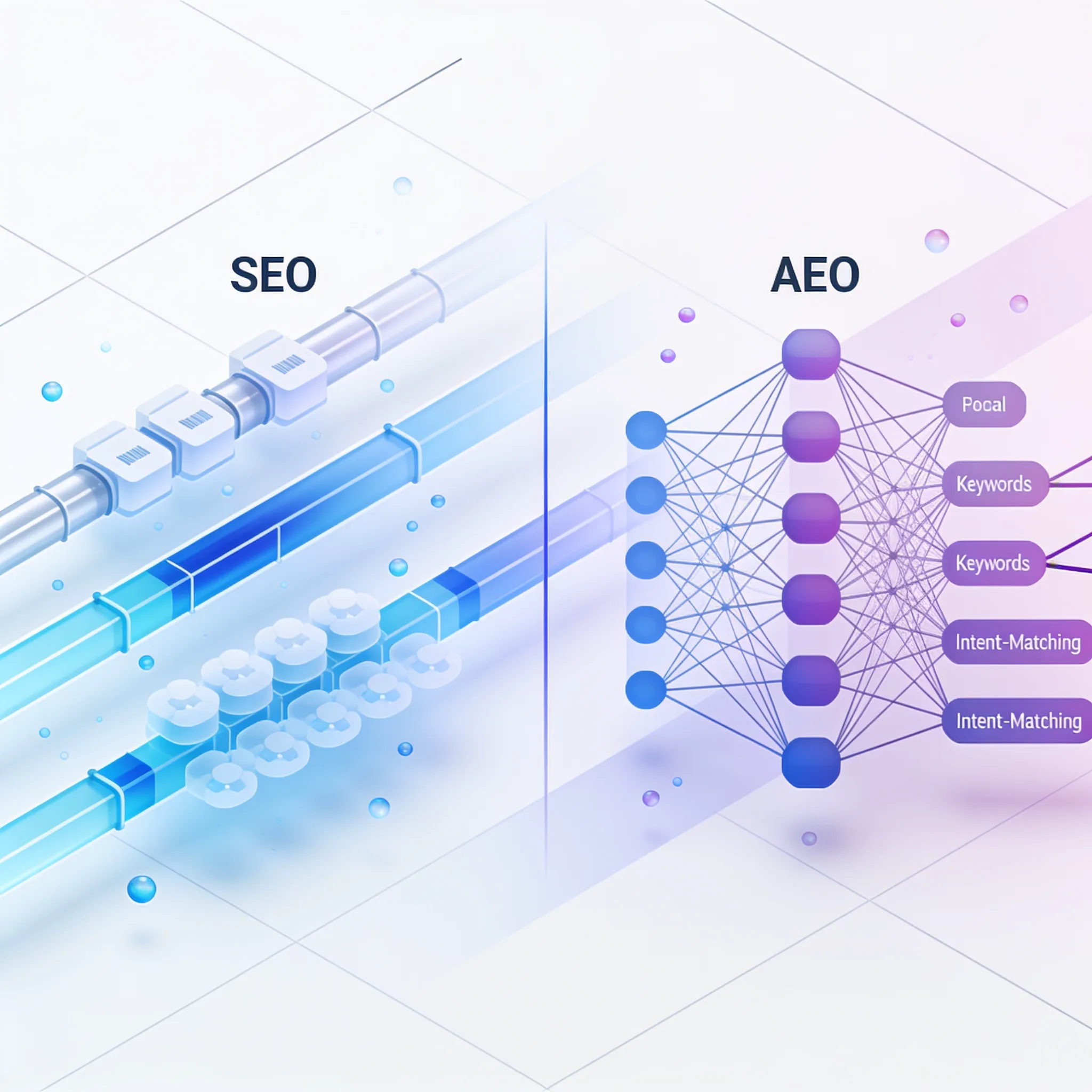
AEO focuses attention on the answer surfaces produced by search and assistant products. The underlying work remains familiar: discovery, crawl access, indexing, relevance, source quality, and useful pages.
Google's documentation says AEO and GEO are industry terms and that optimizing for Google's generative search remains SEO. The practical addition is to inspect generated responses and provider-specific access controls.
Map the decisions behind the query
List the questions users ask before they choose, configure, compare, troubleshoot, or renew. Group them by journey stage and identify the page best suited to answer each one. This exposes missing documentation and duplicated articles.
Google may use query fan-out, but the generated searches are dynamic. Do not pretend a fixed seven-item checklist describes every engine.
Lead with the answer when it helps
A direct opening works well for a definition or simple decision. More complex questions need conditions and evidence before a responsible conclusion. Use as many words as the reader needs and remove repeated keyword phrases.
Add statistics only when they are supported and material. Include the population, period, method, and source close to the number.
Implement structured data carefully

Use schema types that match visible page content and documented search features. Validate JSON-LD and keep headline, dates, author, images, questions, and answers synchronized with the page.
Google states that no special schema is required for AI Overviews or AI Mode. Structured data can improve machine-readable description, but it does not instruct an assistant to cite the page.
Do the assistants your buyers ask name you, or a competitor?
Reads your site, then asks four assistants what your customers ask.
Handle platform differences at the right layer
Google, ChatGPT, and Perplexity use different search products and crawler controls. Verify each one from its current primary documentation. Avoid claims about secret weighting, preferred word counts, or model internals that the provider has not published.
A crawler allow rule creates eligibility. It does not create authority or placement.
Protect quality while improving visibility
Keyword stuffing, made-up case studies, fabricated quotes, and anonymous statistics weaken the source. They also create a correction burden when a user checks the claim. Remove them before adding new pages.
Keep content that provides genuine analysis, documentation, tested instructions, or transparent first-party research. Consolidate near-duplicate pages.
Find out what ChatGPT says about you before your next buyer does.
Free, no account. The paid audit is $490 and takes 3-5 business days.
Frequently Asked Questions
