
You cannot guarantee an AI citation. You can make a page eligible and worth considering by allowing the right search crawlers, publishing accurate first-party facts, citing primary sources, keeping important information in visible text, and maintaining technical SEO. Track a stable prompt sample, repeat tests, and separate citations from mentions, referrals, and revenue.
- No site can force a citation, but it can remove crawl barriers and provide a stronger, more useful source.
- Original facts need transparent methods, while external claims should link to the primary source.
- Measure citations as variable platform observations and connect referrals to business data only where attribution exists.
How AI search products choose sources

Providers use different combinations of crawling, search indices, retrieval, ranking, and generation. Their source sets can change between runs. Public documentation explains parts of these systems but does not expose a universal citation formula.
Aim for eligibility and source quality. Do not promise placement.
Build first-party evidence that can be checked
A company can publish product documentation, implementation details, original datasets, benchmark methods, or tools. State who produced the material, when, how, and under what limits.
A hypothetical example should be labeled as such. Never convert a model or scenario into a client result.
Use structured data as description
Add structured data only when it matches visible content and a relevant schema type. Validate syntax and keep dates, author, images, and FAQ text synchronized.
Google says no special structured data is required for its AI features. Other platforms do not publish a schema switch that guarantees citation.
Make source pages clear across platforms
Use descriptive titles and headings, accurate terminology, accessible text, and direct links to primary evidence. Keep key details out of scripts or images that a crawler may not process as expected.
For ChatGPT search, verify OAI-SearchBot access. For Google, verify Search eligibility. For Perplexity, check PerplexityBot and relevant infrastructure.
Do the assistants your buyers ask name you, or a competitor?
Reads your site, then asks four assistants what your customers ask.
Track attributed and unattributed appearances
Record linked citations and unlinked mentions separately. Capture the exact prompt, engine, date, locale, and source URL. Repeat the prompt enough to observe variation.
Use analytics for identifiable referrals. Do not infer a visit or sale from an unlinked answer.
Choose useful specificity over broad ranking targets
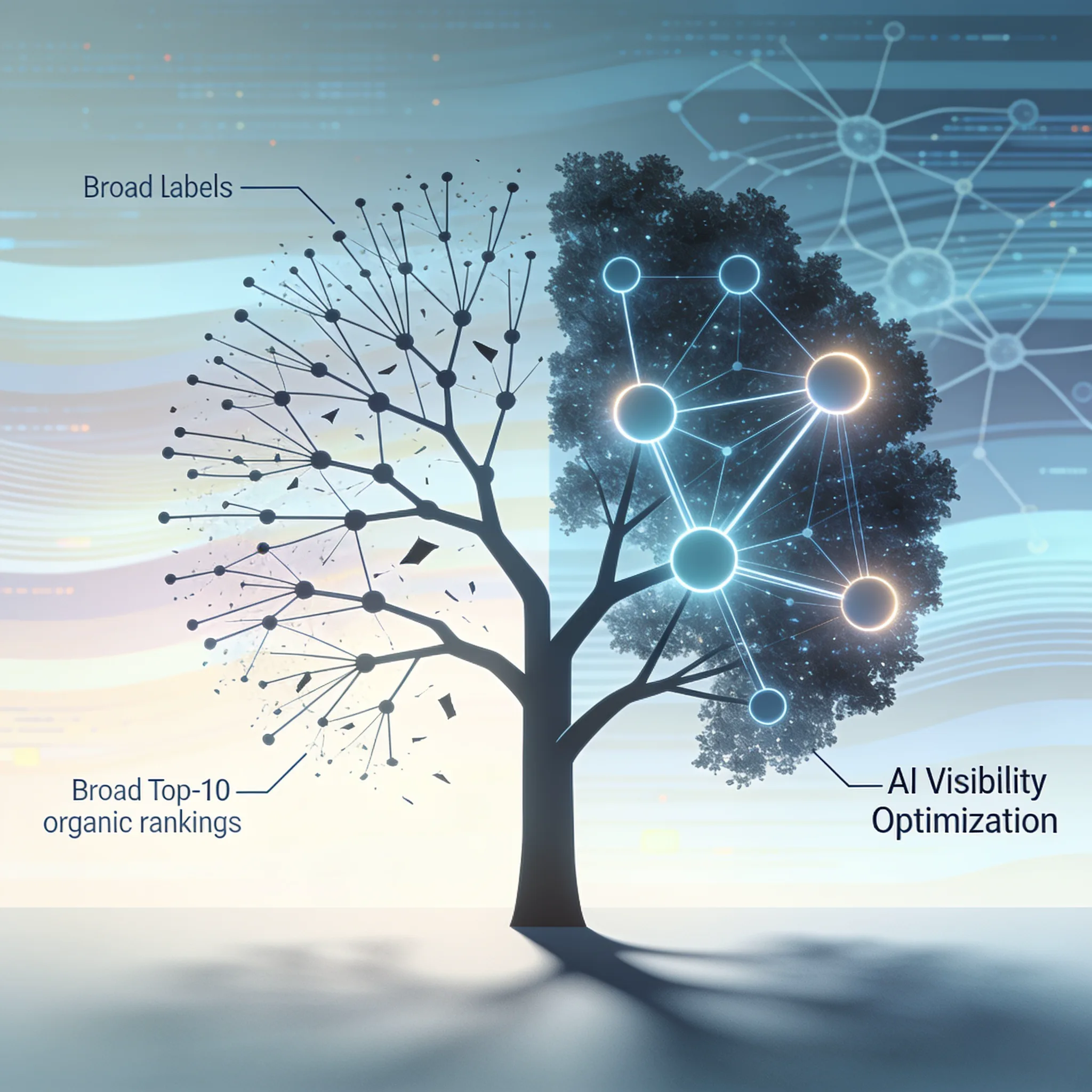
A precise source can be useful for a narrow task even if it does not rank for a broad category phrase. That does not mean broad organic visibility is harmful. Search rankings and generated citations are different observations with shared foundations.
Prioritize the questions the business can answer with real expertise and evidence.
Find out what ChatGPT says about you before your next buyer does.
Free, no account. The paid audit is $490 and takes 3-5 business days.
Frequently Asked Questions
