
Lead generation agents can support research, enrichment, routing, and message drafting, but they still need consent, deliverability controls, data checks, and human review. Judge a pilot by qualified pipeline and seller time alongside replies, complaints, correction work, software cost, and maintenance. Replace every ROI assumption with the company's observed data.
- Lead generation agents can support research, enrichment, routing, and drafting, but outreach still needs consent, deliverability, and quality controls.
- Measure qualified pipeline and seller time alongside activity counts so low-quality meetings do not look like success.
- Build the cost model from current software, data, review, maintenance, and correction inputs rather than external payback claims.
What Are AI Agents for Lead Generation?

AI agents for lead generation are autonomous software systems that execute prospecting, data enrichment, and outreach tasks without requiring constant human prompting or manual triggering from your team. They identify intent signals. They scrape sources, draft messages, and sync directly into your CRM to scale pipeline creation.
Adoption is exploding. But operators must choose between point solutions and native CRM integrations.
For skimmers: pick a native Salesforce or Hubspot integration over a standalone tool, because the data sync cost of standalone tools destroys your ROI through a failure mode called schema drift. A standalone agent operates in its own database. Every time you add a custom field to your CRM, you must manually map that field in the agent backend.
Miss the mapping. The agent overwrites the record with null values when it syncs back to the CRM.
We watched this happen at a B2B SaaS company generating 500 inbound leads a month where they forgot to map a critical compliance checkbox, and the agent processed 2,000 records, overwrote the CRM, and wiped the compliance data entirely. Plus a massive compliance violation.
Strict data boundaries reduce the scope of a lead generation agent. Limit reads to approved objects, write proposed changes to a staging area, and require review before mutating the primary contact record. Measure error and override rates in the actual pilot.
Treat direct CRM writes as a high-risk permission. A safer pilot writes proposed enrichment to a staging record, where an SDR can reject hallucinations and preserve human notes before merging approved fields into the CRM. Measure rejection rate and record damage during the pilot.
Key capabilities of modern systems include: 1. Intent signal detection 2. Real-time data enrichment 3. Multi-channel outreach orchestration 4. CRM synchronization and hygiene 5. Meeting scheduling automation
Step 1: Audit Your CRM and Combat Data Decay
Before deploying new technology, audit your existing CRM. Why would you pay for that?
This is the correct approach.
Keep autonomous enrichment out of production until test results support it. Human review protects sender reputation when generated data or messages are wrong.
To prepare your database for automation: 1. Export current CRM to assess baseline email bounce rates. 2. Run a decay audit on a random sample of 1,000 records. 3. Set up API rules to flag missing firmographics before import. 4. Connect a secondary enrichment source to validate emails manually.
Data decay is inevitable, but AI helps you manage the decay rate instead of pretending it doesn't exist, which means clean data is the foundation of any successful pilot you run.
Step 2: Compare Top AI Lead Generation Platforms and Pricing
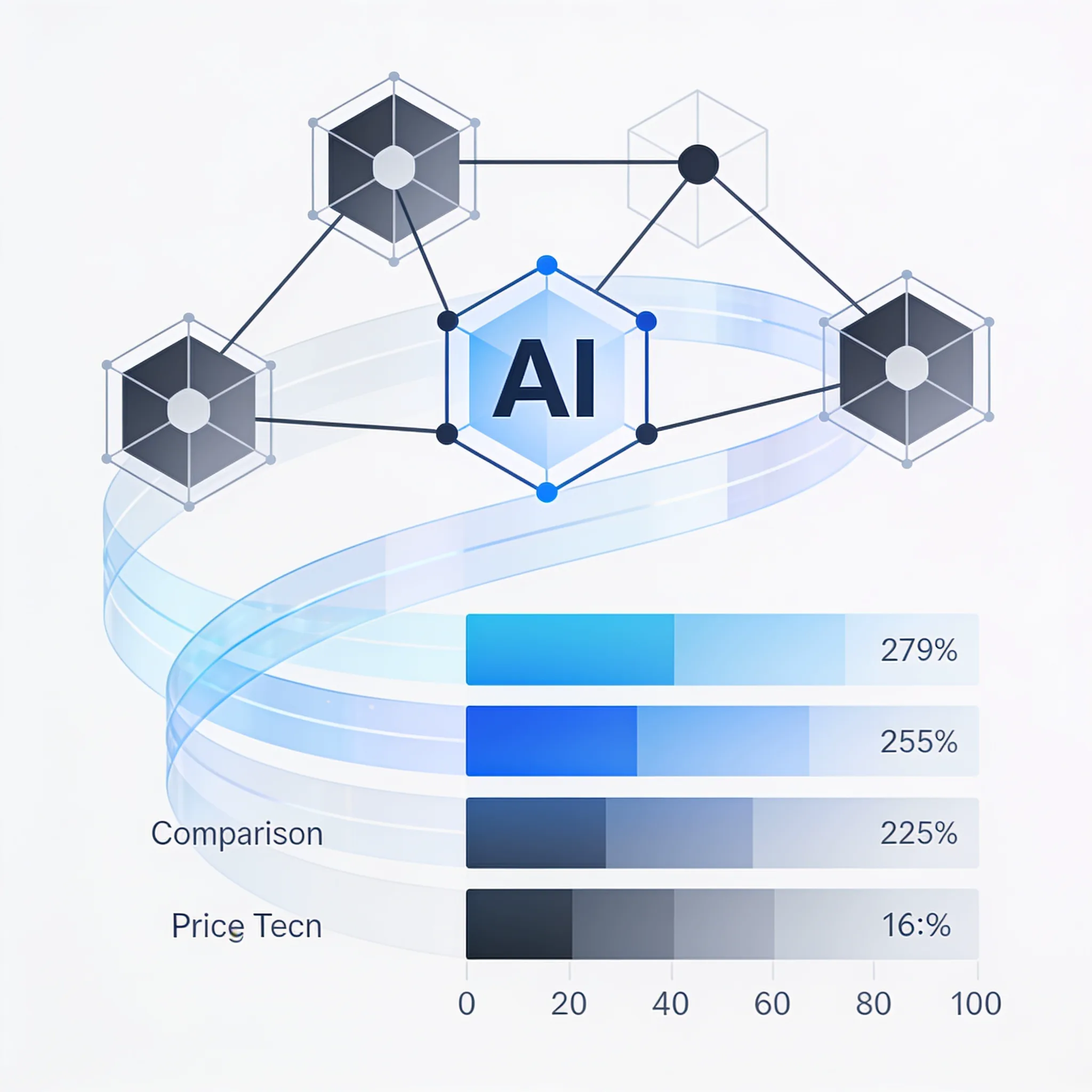
The price disparity is massive. What does "no setup time" actually mean? Setup takes weeks. You must map custom fields, train the model on ICP parameters, and warm up sending domains before you send a single email.
Integration effort depends on source data and interface quality. A strict payload schema can reduce ambiguity, but the team should estimate the work from a representative integration rather than a universal timeline.
We use this standard JSON payload to connect agents to our CRM via webhook, and this structure ensures consistent data mapping across systems while preventing the schema drift that killed our early deployments.
{
 "event": "new_lead",
 "lead_data": {
 "email": "jane@company.com",
 "linkedin_url": "linkedin.com/in/jane",
 "company_domain": "company.com",
 "icp_match_score": 87,
 "intent_signal": "funding_round"
 },
 "source": "agent_01"
}
Here is a pricing comparison of top platforms that we have evaluated across 50+ deployments, weighing setup time, hidden infrastructure costs, and actual production performance against vendor claims.
| Platform | Starting Price | Setup Reality | Best For |
|---|---|---|---|
| AgentForce | $1,500/mo | Native CRM setup | Enterprise Salesforce users |
| Clay | $149/mo | Steep learning curve | Enrichment heavy teams |
| 11x | $500/mo | Needs sending infrastructure | High volume outbound |
AI Lead Gen Cost Calculator
Calculate your monthly software cost versus manual SDR cost.
Step 3: Define Pilot Success Criteria to Avoid the 88% Failure Rate
Most operators run pilots blind. Without strict KPIs, you burn cash.
You can achieve this. You must define the math first.
Here is the decision flow we use for pilot gating.
To avoid pilot failure, operators must enforce strict parameters: 1. Set a 30-day target for cost per qualified meeting. 2. Require a 15% reply rate minimum. 3. Measure bookkeeping hours saved, not just pipeline generated. 4. Review agent output weekly to adjust ICP filters.
AI Agent Readiness Quiz
Assess your team's readiness to deploy AI lead generation agents.
Do you have documented ICP and strict CRM hygiene?
The 'Autopilot' Myth: Uncommon Insight on Human-in-the-Loop Oversight
Vendors promise 24/7 autonomous prospecting, and this is a myth.
And full autonomy breaks trust with prospects.
A generation agent can invent a certification when a prospect asks a technical question that is not covered by authorized documentation. Restrict answers to approved sources, require a citation, and route unsupported claims to a person before sending.
The trade-off is obvious: saving SDR time on inbox management costs you entire enterprise deals, and the agent doesn't know it lacks the answer because the language model tunes for conversational continuity, not factual accuracy. It generates a response that sounds confident. To a prospect, this looks like a deliberate lie.
To mitigate this, you must enforce a mandatory human review queue for any inbound reply exceeding a standard sentiment threshold or containing trigger words like security, compliance, pricing, or legal. The agent should draft the reply and route it to an SDR for approval, and this increases latency by a few hours but protects your reputation. Email service providers monitor replies and spam complaints.
If a prospect marks the email as spam because the agent lied, your deliverability drops for the entire domain.
The workflow still needs an accountable reviewer, often an SDR, who approves AI-generated messages before they reach a prospect.
Assign oversight by risk. Let software prepare low-impact research and drafts, require review before messages or CRM changes, and block autonomous legal, pricing, security, or compliance claims. Set thresholds from pilot results rather than assumed accuracy rates.
| Task | Autonomy Level | Human Oversight Need |
|---|---|---|
| Data Enrichment | High | Spot checks only |
| Email Drafting | High | Mandatory review |
| Cold Calling | Low | Human takes the lead |
| Discovery Calls | None | Human only |
Building with AI models? AIGROW API credit runs Claude, GPT and Grok models up to 75% below list price.
How Do AI SDR Agents Perform on Core Lead Generation Tasks?
AI agents for lead generation excel at high-volume, low-complexity tasks, and they fail at nuanced discovery, which means you must align task complexity with system capabilities before scaling anything into production.
The mechanism behind the performance gap is context retrieval. Email outbound achieves 92% accuracy because it is structured. The agent uses a fixed template and inserts variables like first name, company name, and a recent funding signal.
It fills in the blanks using Retrieval-Augmented Generation. But discovery calls hit 45% accuracy because they require active listening and multi-turn reasoning, and the agent cannot anticipate the prospect's next question and loses context after five conversation turns.
The edge case that breaks the happy path is scaling a 95% accuracy rate across 10,000 leads. A 5% error rate means 500 incorrect records can enter the CRM. In a hypothetical qualification workflow, an agent might match revenue and industry while missing a required headcount constraint.
That error can fill a seller's calendar with unqualified calls. Measure false positives, rejected meetings, and seller review time before expanding the workflow.
Localization needs its own test set. Outreach written for one market may perform poorly in another because language, evidence, meeting expectations, and consent rules differ. Review messages with local staff, define a qualified reply, and compare reply quality and booked meetings by market before increasing volume.
Systems handle structured outreach well, but unstructured conversation remains a hard problem, so operators should focus agent deployment on data processing and email generation first before attempting anything more complex.
| Task Type | Production Rate | Accuracy | Best Use Case |
|---|---|---|---|
| Email Outbound | High | 92% | Top of funnel |
| Data Enrichment | High | 95% | CRM hygiene |
| LinkedIn DMs | Medium | 80% | Social selling |
| Discovery Calls | Low | 45% | Qualifying deep tech |
The True ROI and Payback Period of AI Lead Gen Agents
Build the investment case from qualified pipeline, seller time, software cost, correction work, and deliverability incidents. Any external benchmark needs a dated source and should not replace the company's own baseline.
Are you tracking the right conversion stage? You must adjust for MQL to SQL conversion math.
Here is a worked example for 1,000 leads where manual processing costs 200 hours at $50 an hour totaling $10,000, while an AI agent costs $1,500 monthly plus $500 in API tokens totaling $2,000. The break-even point is 400 leads. You save $8,000 per cycle.
But this simple math hides the true trade-off. Operators calculate the software cost and the API tokens but ignore the secondary infrastructure and wasted executive time, because the real cost of deployment includes inbox rotation software to protect deliverability, secondary enrichment APIs, and engineering hours to maintain the webhook infrastructure. Secondary enrichment APIs like Apollo or Clearbit add $300 to your monthly bill.
Inbox rotation tools like Instantly or Smartlead add $150, and you also need a dedicated sending infrastructure with warmed up domains. If your engineering team spends 20 hours a month maintaining the webhook bridges and fixing schema mismatches, add $1,000 to the monthly cost. The true cost of a $1,500 AI agent is closer to $3,000 a month.
A hypothetical ROI model should include meeting quality and seller time, not only software cost. If an agent books meetings outside the target buying committee, the apparent activity can consume sales capacity without creating qualified pipeline. Replace every model input with observed data before making an investment claim.
This is why operators scale AI agents for lead generation carefully, because the unit economics only work when you manage conversion rates closely and track the fully loaded cost of a wasted executive hour.
Should You Build or Buy an AI Agent for Lead Generation?

AI agents for lead generation present a build versus buy choice: buy if you need speed and want to avoid engineering headcount, or build if you have unique data sources that no SaaS platform can access.
Each approach has distinct trade-offs that operators must weigh against their specific constraints, available engineering resources, and tolerance for vendor lock-in over a multi-year deployment horizon. Pros and cons of each approach: 1. Buy: Faster time to value, lower upfront cost, but limited custom logic.
2. Build: Total control over data privacy, but requires engineering talent. That is the shape of AI Agents for Lead Generation in practice.
| Approach | Upfront Cost | Time to Value | Best For |
|---|---|---|---|
| Buy SaaS | Low | 30 days | Standard outbound teams |
| Build Internal | High | 6 months | Regulated industries |
| Hybrid | Medium | 90 days | Scaling enterprises |
The newest Claude, GPT and Grok models, up to 75% below list price
One API key for Claude, GPT and Grok models. It works with the OpenAI and Anthropic SDKs and with Claude Code.
Each model’s rate through AIGROW credit sits beside its maker’s list price, never above it.
Frequently Asked Questions
