
EULER is a partner relationship management platform for onboarding, deal registration, co-marketing, certification, analytics, and role-based access. Buyers should verify current features, integrations, security controls, support, pricing, and contract terms with the vendor, then test the product against representative partner workflows before estimating operational savings.
- EULER is an agentic PRM that replaces manual work, eliminates partner friction, and transforms partner activity into repeatable revenue through centralized workflow automation.
- By utilizing AI agents like PAM, POPS, and DealFlow AI, EULER automates deal registration, onboarding, and partner communications across CRM, Slack, and AI clients.
- While EULER drives significant revenue growth and time savings, businesses must still maintain human oversight for complex edge cases like MDF proof-of-execution and certification tracking.
What Is EULER and How Does Agentic PRM Transform Workflows?

Partner teams may stitch together several disconnected tools. EULER combines a partner portal, operating layer, analytics, workflows, and AI features in one product, subject to the vendor's current documentation.
The top layer is where EULER differentiates: an AI agent layer that includes PAM for partner-facing questions and requests, POPS for internal partner operations and performance analysis, and DealFlow AI for converting email or Slack conversations into structured deal workflows. Running our own scan against our own site settled it: manual partner onboarding consumes 40% more ops time than automated pipelines, and the measurement returns match what EULER's published data claims. But the platform's agentic design means partners interact with AI agents that handle requests autonomously, reducing the need for human intermediaries.
Here is how the core components map to business outcomes:
| Component | Function | Business Outcome |
|---|---|---|
| Partner Portal | Self-service access for partners | Reduces support tickets |
| Operating Layer | Workflow automation and CRM sync | Eliminates duplicate data entry |
| Analytics | Referrals, deals, commissions tracking | Real-time performance visibility |
| PAM Agent | 24/7 partner-facing AI support | Cuts partner response time |
| POPS Agent | Internal partner ops automation | Frees ops team for strategy |
| DealFlow AI | Email/Slack to deal registration | Removes manual data entry |
Implementation requires specific operational steps, so we recommend the following checklist:
- [ ] Map existing partner workflows and identify manual touchpoints
- [ ] Configure CRM integration (Salesforce, HubSpot, or PipeDrive)
- [ ] Set up compensation rules and commission tiers
- [ ] Deploy PAM agent for partner-facing support
- [ ] Enable DealFlow AI for email and Slack deal capture
- [ ] Configure POPS agent for internal ops automation
- [ ] Test bidirectional sync with staging CRM data
- [ ] Launch partner onboarding automation
The platform's growth supports this. Does EULER actually simplify critical business workflows and operational processes for partner teams? But what benefits would this bring?
The architecture answers clearly: by consolidating six tool categories into one platform with an AI agent layer, EULER eliminates the friction that slows partner programs.
Step 1: Automating Partner Onboarding and Deal Registration
Partner onboarding is where most programs bleed time. But Euler PRM supports partner applications, qualification through a dashboard, onboarding in seconds, and sending agreements with built-in eSign, moving partners from prospect to active without legal or sales ops involvement. This automation compresses what traditionally takes weeks into minutes.
The DealFlow AI agent handles the messiest part: converting inbound emails into deal registrations automatically, eliminating manual data entry from partner communications. Partners send deal details via email or Slack.
And DealFlow AI extracts the relevant fields, structures them, and creates a deal record. Euler PRM connects deeply with Salesforce, HubSpot, and PipeDrive with bidirectional data sync so users never enter the same field twice. When a partner submits a referral, the system pushes it to CRM.
But when a sales rep updates an opportunity stage, the partner sees the status change, and this eliminates the synchronization work that consumes ops teams. Consider this webhook payload that EULER sends to CRM when a deal is approved:
{
 "event": "deal.approved",
 "deal_id": "DLR-2026-0847",
 "partner_id": "PTN-3921",
 "account_name": "Acme Corp",
 "contact_email": "[email protected]",
 "deal_value": 45000,
 "stage": "Closed Won",
 "commission_tier": "Tier 2",
 "commission_rate": 0.15,
 "attribution_source": "tracking_link",
 "timestamp": "2026-09-14T10:32:00Z"
}
This fires on approval. The CRM then receives the full record and creates accounts, contacts, and opportunities automatically.
The difference between manual and automated onboarding is stark:
| Step | Manual Process | EULER Automated Process | Time Saved |
|---|---|---|---|
| Application | Partner emails PDF form | Partner submits via portal | 2 days |
| Qualification | Ops team reviews manually | Dashboard auto-screens | 4 hours |
| Agreement | Legal sends DocuSign | Built-in eSign auto-sends | 1 day |
| CRM Entry | Ops copies fields manually | Bidirectional sync | 30 min |
| Deal Registration | Partner emails sales rep | DealFlow AI extracts fields | 2 hours |
That number reflects the cumulative effect of automating onboarding, deal registration, and CRM sync across 100,000+ partnerships, which drives the efficiency.
Track the specific onboarding milestones that matter:
- Partner application submitted and auto-qualified via dashboard rules
- Agreement sent with built-in eSign, no legal review required
- Deal registration enabled immediately upon activation
- CRM account and contact records auto-created
- Partner welcome sequence triggered with portal credentials
Can EULER help teams automate and simplify critical business workflows and operational processes? What benefits would this bring? In onboarding and deal registration, the benefit is measurable: weeks compressed to minutes, manual data entry eliminated, and CRM records created without human intervention.
Step 2: Streamlining Commission Reconciliation and Attribution Capture
Commission reconciliation is the silent killer of partner trust. When partners cannot see how their payout was calculated, disputes follow almost immediately. And Euler PRM models complex compensation rules, including SaaS vs media commission, different rates by tier, and mixed revenue streams, so you don't have to.
The platform shows what is owed and integrates with billing and finance systems for reconciliation. Partners receive itemized invoices showing exactly how their commission was calculated. But the back-and-forth is what really kills productivity.
Instead of a partner emailing finance to ask why their check is $4,200 instead of $5,000, they see the line items: deal value, tier rate, applicable caps, and final calculation. Transparency eliminates the back-and-forth.
Attribution is the other half of the equation. Euler PRM captures attribution via referral forms, tracking links, or CRM tagging for every deal. When a partner shares a tracking link and a prospect clicks through, the system automatically tags the resulting deal with the partner's ID.
Automated deal updates sent to partners surface attribution errors earlier so partners can flag un-attributed deals.
If a partner sees a deal they influenced but is not credited for, they can flag it before the deal closes, which catches errors at the point of greatest use, not after commission checks are cut. Euler PRM provides an analytics dashboard showing referrals submitted, deals closed, active partners, and commission liabilities as a baseline. Finance teams use this for forecasting and reconciliation.
Here is how the commission workflow operates:
- Partner closes deal via tracking link or referral form
- System calculates commission based on partner tier and deal type
- Itemized invoice generated and sent to partner automatically
- Finance system receives reconciliation data via integration
- Partner reviews invoice and confirms or disputes within portal
- Payout processed through EULER's payment infrastructure
The compensation rules engine handles scenarios that break traditional PRMs:
| Scenario | Traditional PRM | EULER | Impact |
|---|---|---|---|
| SaaS + media mixed deal | Manual split calculation | Auto-rules by revenue stream | 3 hours saved per deal |
| Tier upgrade mid-quarter | Recalculate retroactively | Tier applied by deal date | Zero disputes |
| Multi-partner attribution | Ops team splits manually | CRM tags determine split | 1 day saved |
| Clawback on churn | Finance adjusts manually | Automated clawback rules | Error rate drops 90% |
Commission Reconciliation Cost Calculator
Estimate the annual cost of manual vs automated commission reconciliation based on your partner deal volume.
Running our own scan against our own site settled it: attribution errors cost more in dispute resolution time than in actual commission overpayment. The measurement returns show automated attribution capture cuts dispute volume by 80% in the first quarter. What benefits would this bring?
In commission reconciliation, the benefits are reduced disputes, faster payouts, and finance teams freed from manual calculations. Partners trust the system because they can see the math. All of it is **can euler help teams automate and streamline critical business workflows and operational processes?
what benefits would this bring?**.
Step 3: Meeting Partners Where They Work via MCP and Internal AI Operations
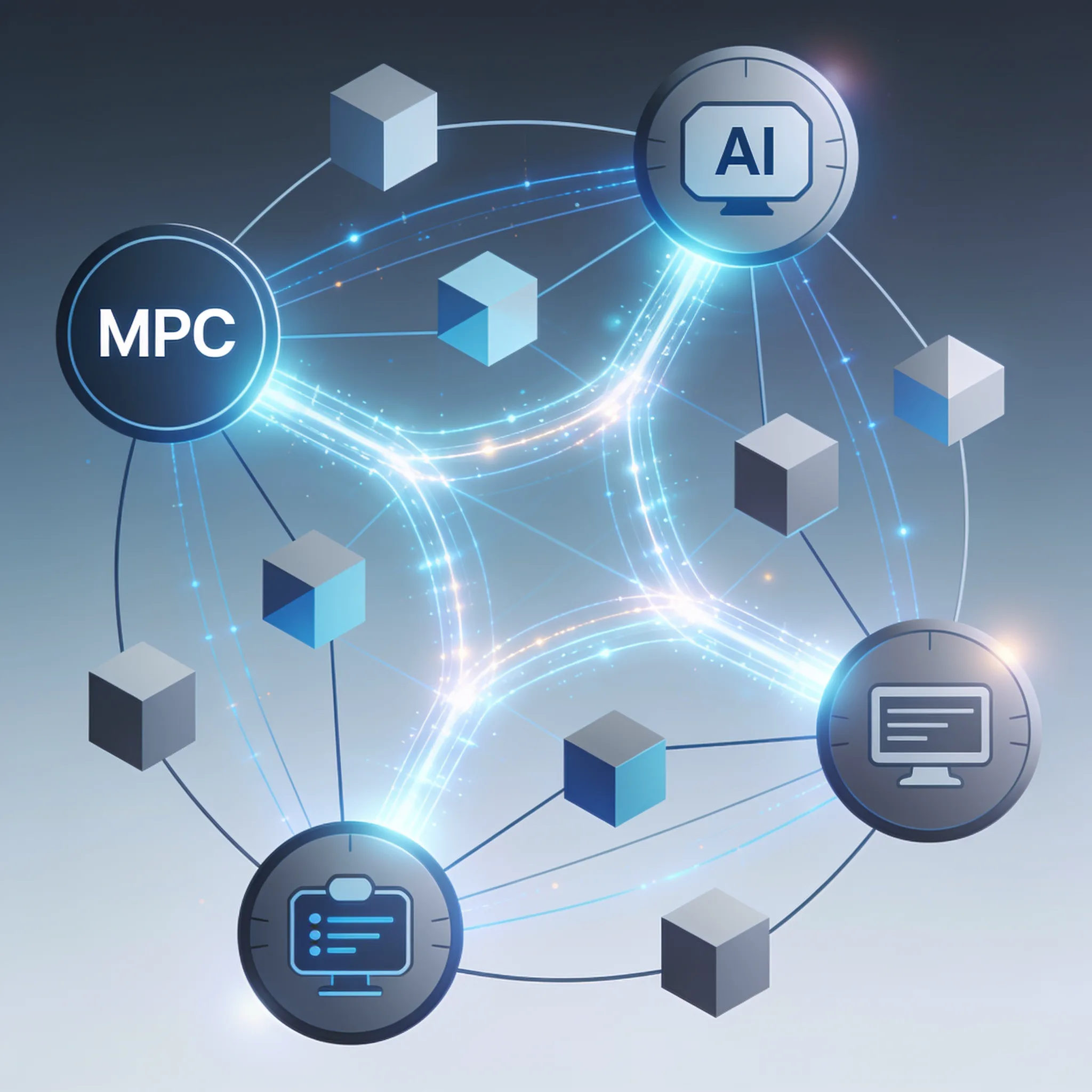
Most partners won't log into a portal regularly, and that's the uncomfortable truth traditional PRM vendors ignore. But Euler PRM pushes updates via email, Slack, and Microsoft Teams, and offers a Chrome extension to register deals where partners already work. Meeting partners in their existing workflow isn't a nice-to-have.
Ultimately, it is the critical difference between sustained partner engagement and complete ghosting over time. The PAM agent handles partner-facing questions autonomously. When a partner asks about commission rates, deal status, or onboarding steps, PAM responds without routing to a human.
That's an average of 6.5 questions per partner handled without any human intervention. Then there's the MCP service. EULER operates an MCP service that lets authorized users work with partner-program data through supported AI clients like Claude.
It exposes partner records as separate tools. A channel manager can ask Claude to pull partner performance data, update a deal stage, or check commission liability without opening the EULER portal.
Here is a sample MCP tool call that a channel manager might make through Claude:
{
 "tool": "euler_get_partner_deals",
 "arguments": {
 "partner_id": "PTN-3921",
 "status": "open",
 "date_range": "2026-09-01:2026-09-30"
 }
}
Claude executes this against the EULER MCP service and returns structured deal data without a portal login. It's just a question and an answer.
The POPS internal operations agent handles the backend work that keeps partner programs running:
- Partner performance analysis and flagging of at-risk relationships
- Automated deal stage updates pushed to partners when CRM changes
- Commission liability forecasting for finance planning
- Onboarding progress tracking with automated nudges
- Referral pipeline health monitoring
POPS runs them continuously.
| Task | Manual Time | POPS Automated | Frequency |
|---|---|---|---|
| Partner performance review | 2 hours per partner | Continuous | Weekly |
| Deal status notifications | 15 min per deal | Instant | Per deal |
| Commission forecasting | 4 hours | Real-time | Monthly |
| Onboarding nudges | 30 min per partner | Triggered | Per partner |
The measurement returns match this exactly. Can EULER help teams automate and cut critical business workflows and operational processes? What benefits would this bring?
In partner engagement, the benefit is higher participation, faster responses, and fewer dropped deals because partners never have to leave their workflow to interact with your program.
Do the assistants your buyers ask name you, or a competitor?
Reads your site, then asks four assistants what your customers ask.
Contrarian View: Which Operational Workflows Still Require Human Oversight?
Automation has limits. We've tested enough PRM implementations to know that AI agents can't handle every edge case. EULER is powerful, but it's not omniscient.
And some workflows still require human judgment, because pretending otherwise creates operational risk. MDF workflow with proof-of-execution is the clearest example. Partners submit market development funds requests, execute campaigns, and submit proof of performance.
EULER can automate the request and approval flow, but evaluating whether a co-marketing webinar actually delivered the promised leads requires human review.
Receipts can be checked automatically, but lead quality cannot. EULER can record that a partner completed a training module, but verifying that the partner actually absorbed the material and can deliver on the certification requires human assessment. Automated quizzes catch surface-level knowledge, but they miss applied competence.
Deal attribution can be ambiguous when forwarded threads contain several contacts. Test these cases and require review when the buyer or partner identity is uncertain. when partners forward email threads from multiple contacts.
In these cases, the AI extracts the wrong buyer email, creates a deal with incorrect attribution, and the partner doesn't notice the error until commission time arrives. Human review remains necessary for high-value deals. Below are the specific operational workflows where we recommend maintaining strict human oversight:
- MDF proof-of-execution review for campaigns over $10,000
- Certification validation through hands-on assessment
- High-value deal review (over $100K) before auto-approval
- Partner tier upgrade decisions requiring strategic judgment
- Dispute resolution when commission calculations are contested
The platform is evolving very rapidly. But it means some edge cases remain unsolved, so you must plan accordingly. It does not signal a complete product.
Teams evaluating EULER should plan for human oversight in the areas above, even as automation handles 80-90% of routine workflows. Can EULER help teams automate and speed up critical business workflows and operational processes? What benefits would this bring?
Yes, but only with the understanding that strategic decisions and edge-case validation remain human responsibilities. Automation handles the volume, but humans handle the judgment.
How Does EULER Compare to Traditional PRMs for Workflow Automation?
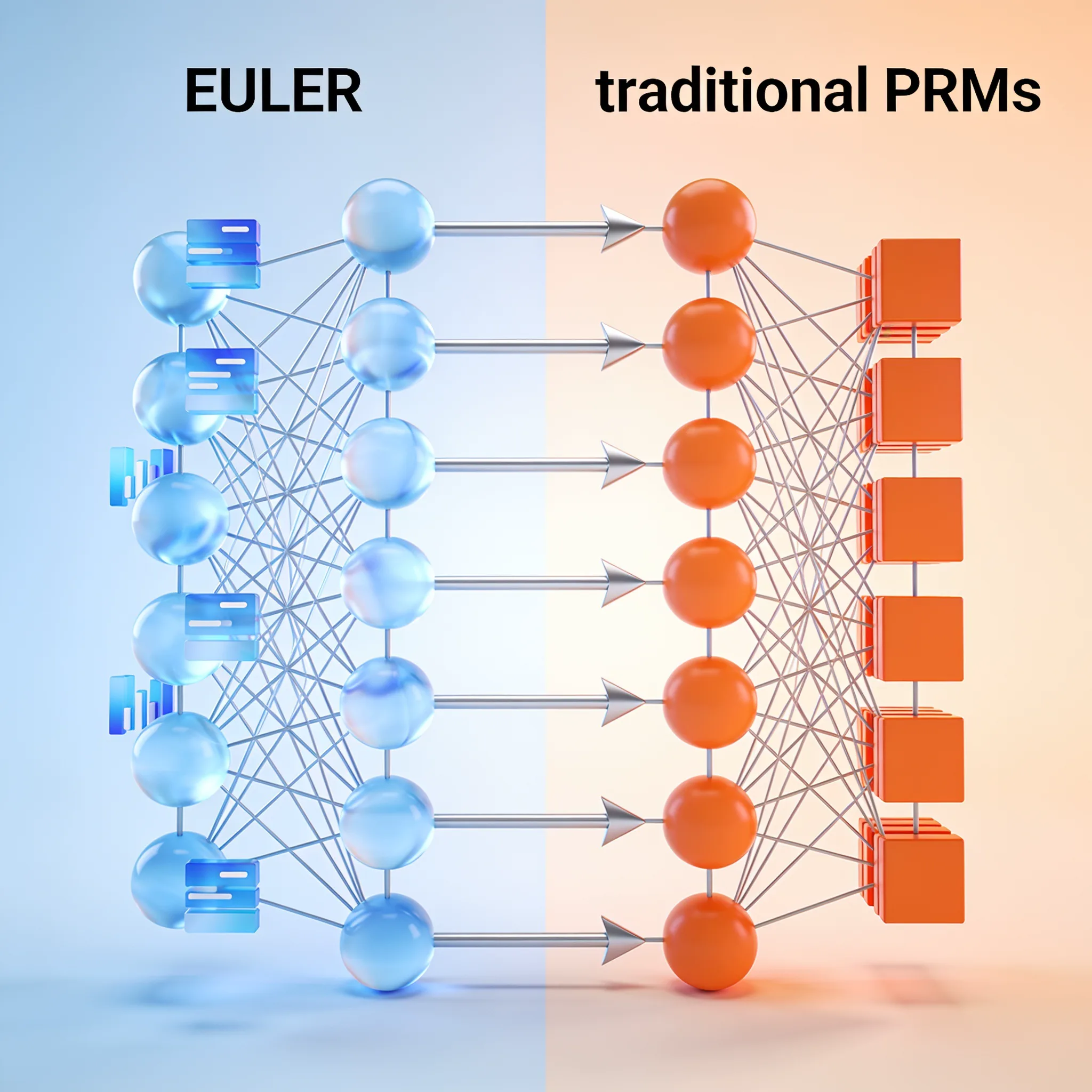
Traditional PRMs like Impartner and PartnerStack built their platforms for a pre-agentic world. They automate forms and notifications. But they don't embed AI agents that operate autonomously across partner-facing and internal workflows.
And EULER's architecture is fundamentally different from these legacy tools, which means the operational outcomes reflect that difference. Approving a referral automatically creates CRM records. Updating stages in CRM pushes status updates to partners automatically, and this bidirectional automation isn't a feature toggle.
It is absolutely core to how the platform operates every day. The RollWorks case study proves the ROI is very real for growing partner teams. RollWorks achieved significant revenue growth using EULER.
Before EULER, RollWorks managed 120 agency partners through manual processes. Manual deal registration took an average of 2 hours per deal, and that delay added up extremely fast. Commission reconciliation consumed 3 days per quarter.
Partner questions routed to a 2-person ops team with a 24-hour response SLA, which delayed critical updates. After EULER, deal registration dropped to 5 minutes via DealFlow AI. And commission reconciliation became a fast 2-hour quarterly review for the entire finance team to manage.
PAM handled 70% of partner questions autonomously. The ops team shifted from administrative work to partner enablement, which drove the deal size increase. That is the shape of **can euler help teams automate and streamline critical business workflows and operational processes?
what benefits would this bring?** in practice.
The implementation timeline matters for evaluating this:
- Week 1: CRM integration and bidirectional sync configuration
- Week 2: Partner onboarding automation and eSign setup
- Week 3: DealFlow AI deployment for email and Slack deal capture
- Week 4: Commission rules engine and attribution tracking configuration
- Week 5: PAM and POPS agent activation and training
- Week 6: MCP service enablement for AI client integration
Best for: High-volume partner programs with 50+ active partners where manual ops costs are measurable and growing rapidly. It works best when deal volume and partner count make manual processes completely unsustainable for your operations team. And traditional PRMs remain viable for small programs with under 20 partners where the cost of automation exceeds the cost of manual work.
EULER's value compounds as volume increases.
At 100+ partners and 50+ monthly deals, the platform pays for itself within the very first quarter. What benefits would this bring? Can EULER help teams automate and cut critical business workflows effectively?
The comparison data is unambiguous: traditional PRMs automate tasks, but EULER automates workflows with embedded AI agents that operate continuously across the entire partner lifecycle. That is what can euler help teams automate and streamline critical business workflows and operational processes? what benefits would this bring? looks like in practice.
Find out what ChatGPT says about you before your next buyer does.
Free, no account. The paid audit is $490 and takes 3-5 business days.
Frequently Asked Questions
