
Test an AI automation platform with a representative workflow, current rate card, forced failures, and an exit exercise. Compare permissions, logs, data routing, contracts, portability, and total operating cost. Vendor controls can support a compliance program, but no platform makes a deployment compliant by itself.
- Choose from the workflow, integrations, permissions, evidence, volume, failure requirements, and exit plan instead of relying on a generic vendor ranking.
- Translate each vendor billing unit into the actions in a representative production run, then model retries, exceptions, overages, and operating labor.
- Verify routing regions, processors, contracts, audit logs, access controls, retention, export, and incident handling for the actual deployment.
- A framework, managed platform, or trust layer can supply controls, but the customer remains responsible for configuration, lawful use, and operational governance.
What Is the True State of AI Automation Companies Today?
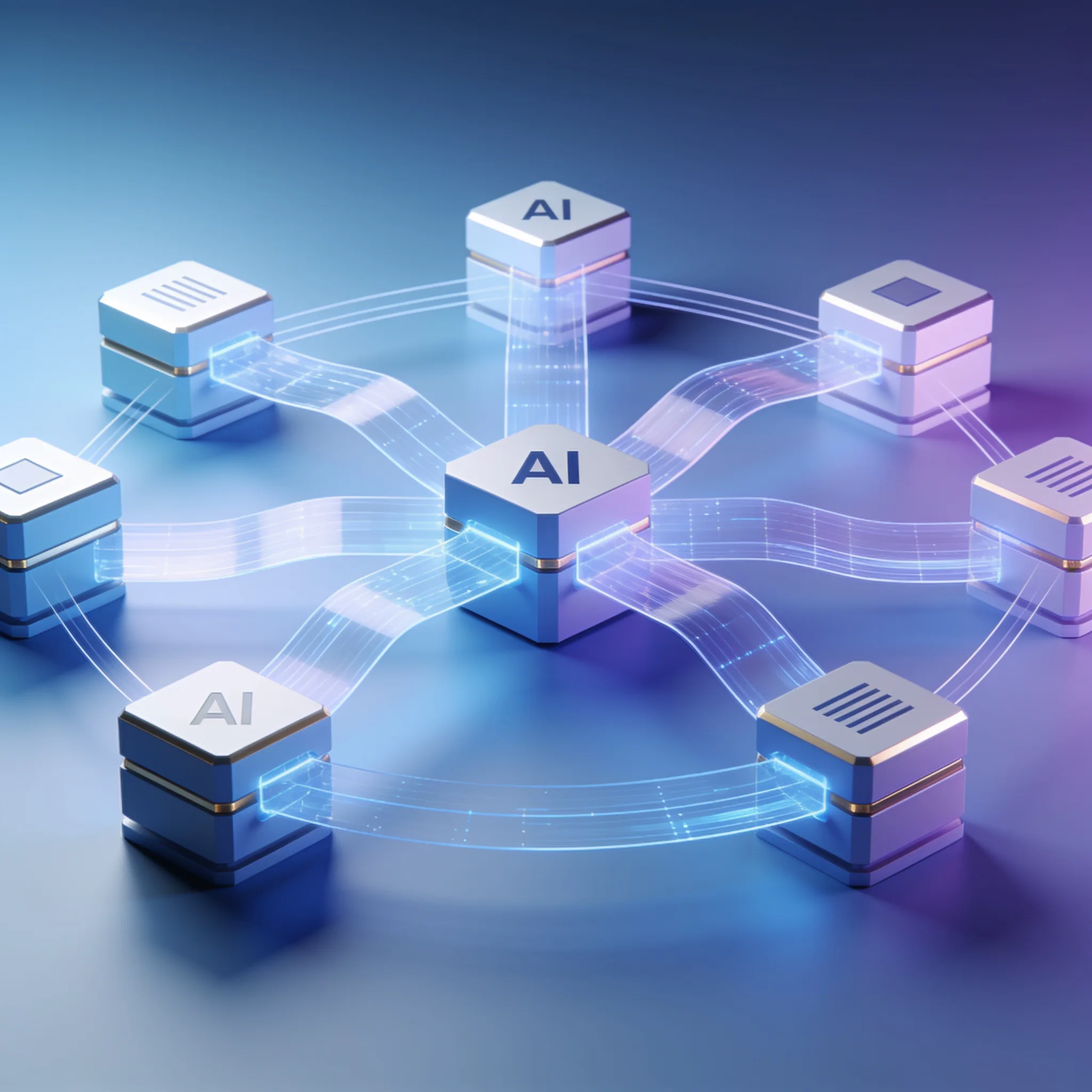
The agent label covers products with very different behavior. Some follow fixed rules, some add a model to a scripted workflow, and some can choose among approved tools within a defined goal. The label alone does not show how the system handles permissions, unexpected input, failure, or review.
Gartner reported in June 2025 that it estimated only about 130 vendors among thousands of agentic AI claims were real at that time. Gartner also predicted that more than 40 percent of agentic AI projects would be cancelled by the end of 2027 because of cost, unclear value, or inadequate risk controls. Treat both figures as Gartner's market estimate and forecast, not a test of a specific product.
Evaluate the workflow instead of the label:
- Give the system a goal that requires choosing between two approved tools.
- Deny one action and inspect whether it stops or escalates.
- Supply missing, malformed, and conflicting input.
- Make a dependency fail and inspect retries, limits, and recovery.
- Review the complete trace and the business outcome.
| System behavior | Suitable use | Main risk to test |
|---|---|---|
| Fixed workflow | Stable, repeatable process | Brittle handling of unexpected states |
| Model-assisted workflow | Classification or extraction inside a defined path | Unsupported or malformed output |
| Tool-choosing agent | Variable tasks within bounded permissions | Excess actions, wrong tool choice, and cost |
A pilot should prove the required behavior on representative cases before a wider contract.
The Uncommon Insight: Most Enterprise 'AI Agents' Are Just Glorified RPA Bots
A chatbot, an RPA flow, and a tool-using agent can all sit in the same product. The useful distinction is the behavior required by the process.
RPA follows defined interface steps and is appropriate when the path is stable and the application lacks an API. A model-assisted workflow can classify or extract data before a deterministic action. An agent can choose tools or plan steps within a goal, but that flexibility adds cost and failure modes.
Ask the vendor to demonstrate:
- The exact permissions available to the agent.
- The tools it may choose and the maximum number of actions.
- How it responds to denied actions, unavailable tools, and ambiguous input.
- Which decisions and outcomes appear in the audit record.
- When a person reviews, approves, or stops the run.
A product does not need broad autonomy to solve a valuable process. Use the least flexible design that handles the required cases and failure paths.
Step 1: Categorize AI Automation Companies by Core Enterprise Positioning

Generic ranked lists are useless. You need a framework. We categorize ai automation companies based on their primary enterprise toolset.
Platforms generally fall into four main buckets, each with distinct trade-offs and hidden costs that you must understand before committing your long-term budget to any specific vendor:
- Productivity suite-embedded: Microsoft Copilot Studio. Best for organizations already locked into the Microsoft 365 platform. Hidden costs arise when exceeding basic included credits.
- CRM-embedded: Salesforce Agentforce. Best for sales and service teams. Free tiers are non-existent for enterprise, and costs scale rapidly with usage.
- IT workflow-embedded: ServiceNow. Best for internal IT service management. Highly capable platform but carries premium enterprise licensing.
- Data-focused: Tools like Maia. Maia targets Data Teams specifically, narrowing its use case to data automation. This leaves out general business workflow automation.
We also see tools like Autohive targeting everyday teams to build AI agents easily. While likely appealing to non-technical users, this positions it as a low-code/no-code tool rather than an enterprise automation platform. You trade power for simplicity.
And when you inevitably need to scale complex operations, that lack of raw power will severely bottleneck your growth and force an expensive platform migration.
| Category | Example Platform | Target User | Limitation |
|---|---|---|---|
| Productivity Suite | Microsoft Copilot Studio | Office workers | Toolset lock-in |
| CRM Embedded | Salesforce Agentforce | Sales and service | High cost per action |
| IT Workflow | ServiceNow | IT operations | Steep learning curve |
| Data Focused | Maia | Data engineers | Narrow use case |
How Do Leading AI Automation Platforms Compare on Features and Pricing?
Pricing units change, and the same business request can invoke several actions. Build a trace of the workflow before comparing plans: authentication, retrieval, model calls, record updates, notifications, retries, and human review.
Salesforce currently meters Agentforce through Flex Credits. Its official pricing page says a standard Agentforce action uses 20 Flex Credits and a voice action uses 30. It also lists 100,000 Flex Credits at $500.
A request that authenticates a customer and retrieves an order uses two actions in Salesforce's published example. Use the current rate card and the actions in your own trace because product-specific multipliers and contracts can change the result.
Microsoft and ServiceNow use different packages and usage units. Quote the exact SKU, region, contract term, included capacity, overage rule, and metered action rather than comparing a headline monthly price.
| Platform type | Unit to verify | Questions for the quote |
|---|---|---|
| CRM-embedded agent | Action, credit, conversation, or user entitlement | Which steps consume credits and what happens on retry? |
| Productivity-suite agent | Message or credit capacity plus licenses | Which model, tool call, and environment features use capacity? |
| IT workflow agent | Platform package plus AI capacity | Which workflows and execution pools are included? |
| Framework | Model, hosting, observability, and engineering | Who operates the service and handles incidents? |
Set maximum iterations, timeouts, spending alerts, and idempotency keys. Then force ambiguous input and downstream failures in the pilot. Do not infer retry billing or loop behavior unless the current vendor documentation or contract states it.
Step 2: Evaluate Governance, Security, and Data Quality Frameworks
Governance starts with the action an agent may take and the evidence needed to review it. Ask the vendor to demonstrate scoped permissions, immutable event records, model and tool traces, retention controls, redaction, incident export, and a reliable way to stop execution.
Map the data path before evaluating residency or transfer claims. Record the primary region, backups, support access, sub-processors, model endpoints, telemetry, and failover destinations. A failover to the United States is not automatically a GDPR violation.
International transfers require an applicable legal mechanism and safeguards for the circumstances, as described by the European Commission. A static region selector is incomplete if failover or support access can bypass it.
Use this checklist with the responsible legal and security teams:
- Which entity acts as controller or processor for each data set?
- Which DPA, transfer mechanism, BAA, or sector-specific agreement applies?
- Can permissions restrict tools, records, fields, and transaction values?
- Can reviewers reconstruct the input, retrieved evidence, decision, action, and outcome?
- What happens when data is stale, malformed, outside the expected distribution, or unavailable?
- Can the organization export data and logs, delete them under policy, and leave the platform?
IBM, Salesforce, Microsoft, and ServiceNow provide governance features. Their features do not certify the customer's workflow. Compliance depends on contracts, configuration, data, purpose, safeguards, and daily operation.
Building with AI models? AIGROW API credit runs Claude, GPT and Grok models up to 75% below list price.
Step 3: Calculate Realistic ROI and Avoid Vendor Lock-In
Model the return from observed workload data. Record monthly manual hours, loaded labor cost, review time, platform usage, model calls, infrastructure, implementation, maintenance, failure remediation, and the percentage of work that the system completes correctly. Treat recovered time as capacity unless the organization can show that it reduced spending or produced additional revenue.
Framework and hosting are separate decisions. LangGraph can orchestrate hosted models and does not require a local GPU. A self-managed stack may need application hosting, a database, queues, observability, secrets management, backups, and on-call ownership.
Local model hosting may add GPU capacity, but that cost comes from the model deployment, not LangGraph itself.
Reduce lock-in where the benefit exceeds the maintenance cost. Keep source prompts, schemas, evaluation cases, business rules, and data outside proprietary interfaces where practical. Require documented APIs, export formats, version history, deletion terms, and an exit test before a long contract.
Agent ROI Scenario
Model annual net capacity value from your own inputs. This is a planning scenario, not a promised return.
| Approach | Costs to measure | Portability check |
|---|---|---|
| Managed platform | Licenses, usage, implementation, review, overages | Export one workflow and its execution history |
| Framework with hosted models | Engineering, hosting, model calls, observability, support | Swap one model and one tool adapter |
| Framework with local models | The same costs plus model-serving infrastructure | Restore the service from documented artifacts |
No general 4x or 5.8x benchmark applies to these approaches. Use a baseline and an observed pilot result.
Bridging the Execution Gap: Moving From Pilot to Production Scale
Everyone is piloting. Few are producing. There is a stark execution gap between testing AI agents and deploying them at scale.
To reach production, you must cross the deployment chasm.
Here is exactly how you can accelerate the journey without getting bogged down in endless pilot cycles that drain your budget and kill team morale: * Start with a narrow, high-value process automation. * Monitor agent exceptions daily and refine tool instructions. * Gradually increase the autonomy level from human-in-the-loop to human-on-the-loop.
* Scale horizontally only after achieving 99% reliability in one workflow.
AI Agent Readiness Assessment
Find out where your organization stands in agentic automation maturity.
What is the current state of your AI agent deployment?
Unanswered Questions: Identifying Industry-Specific AI Automation Vendors
Industry templates can shorten configuration when they match the organization's data and process. They do not establish legal compliance, domain accuracy, or production readiness.
Ask a vendor to map a representative record from input through decision and action. For healthcare, that may include the exact clinical or billing vocabulary and the systems involved. For manufacturing, it may include telemetry formats and maintenance controls.
For finance, it may include jurisdiction-specific rules and an approval path. Have domain, legal, and security owners review those mappings.
Compare a specialized product with a general platform on the same cases. Measure integration coverage, correction rate, escalation rate, latency, operating cost, and exit options. A specialized ontology can help with one department while making reuse harder elsewhere.
A general platform may need more configuration but fit several workflows.
Reject claims that a product is suitable for a regulated industry solely because it offers a trust layer, regional hosting, or audit logs. Those controls are evidence to inspect within the complete deployment.
The newest Claude, GPT and Grok models, up to 75% below list price
One API key for Claude, GPT and Grok models. It works with the OpenAI and Anthropic SDKs and with Claude Code.
Each model’s rate through AIGROW credit sits beside its maker’s list price, never above it.
Frequently Asked Questions
