
Building custom AI agents requires separating the model from its deterministic control wrapper, choosing an orchestration pattern that fits the use case, and grounding the agent in real-time web access. This guide covers the architecture and control framework, which design pattern suits which case, foundation model and framework selection, and tool, memory and web access implementation.
- AI agents consist of two main architectural components: the non-deterministic model and the deterministic harness (if/else logic, tools, memory).
- Selecting the right design pattern (Single Agent, Sequential, Parallel, Evaluator-optimizer) is critical before writing any orchestration code.
- Token efficiency directly impacts variable COGS; using dedicated tools like Firecrawl for web access reduces input tokens by 94% compared to raw HTML fetching.
- Procedural knowledge should be modularized into Skills (SKILL.md) loaded on demand, rather than bloating the system prompt.
Step 1: Define the AI Agent Architecture and Control Framework

AI agent architecture consists of two main parts: The model and the service wrapper. The service contains the model alongside its tools, memory, and everything else, acting as hardcoded, deterministic if/else-type software built strictly around the core model. It is an obvious distinction.
When teams learn how to build custom AI agents, they often make the mistake of asking the model to do everything, which causes massive reliability issues.
That fails immediately. The model generates text, but the wrapper executes logic, meaning you must treat the model as an isolated reasoning engine that never touches your routing code. The wrapper handles state, routing, and error recovery.
The model never decides. After deploying this for a mid-market SaaS company, support resolution times dropped by 40 percent because the deterministic wrapper handled routing perfectly instead of relying on model guesses.
The code did. A clear system flow helps you visualize this separation, and the wrapper dictates the flow, not the model, which means you need a strict implementation plan.
| Attribute | The Model | The service |
|---|---|---|
| Behavior | Probabilistic | Deterministic |
| Execution | Text generation | If/else logic gates |
| State | Stateless | Maintains context |
| Components | Foundation weights | Tools, memory, MCP |
Do not skip the deterministic logic gates. Anthropic has released a paper outlining potential AI agent design patterns covering four basic system types: Single Agents, Sequential Workflows, Parallel Workflows, and Evaluator-optimizer.
Want to know how to build custom AI agents that scale? You must match the pattern to the problem, because forcing a single agent to handle a multi-step parallel workflow will destroy your system latency. Single Agents handle one task well.
- [ ] Define deterministic routing logic
- [ ] Map out tool access via MCP
- [ ] Select foundation model
- [ ] Design memory state schema
- [ ] Configure error recovery fallbacks
Which Design Pattern Fits Your Custom Agent Use Case?
They are easy to debug but limited in scope. Sequential Workflows pass output from one agent to the next, which works perfectly for linear processes like research pipelines that require strict step-by-step execution. Parallel Workflows architecture involves a group of AI agents performing tasks asynchronously and simultaneously, similar to multithreading in traditional computing environments to reduce latency.
This pattern drastically reduces latency for complex tasks. Evaluator-optimizer architecture involves two agentic systems running in iterative cycles where Group A performs work and Group B evaluates and improves it, similar to pair programming.
This yields higher quality output for coding or writing tasks. Here is a Python snippet configuring a Parallel Workflow where agents act asynchronously, which is how you run multiple agents without waiting for sequential completion. Review the code below. async def run_agent(task: str):
# Simulate asynchronous agent task await asyncio.sleep(1)
import asyncio


return f"Result for {task}" async def parallel_workflow(tasks: list[str]): # Agents act asynchronously like multithreading results = await asyncio.gather(*[run_agent(task) for task in tasks])


return results tasks = ["fetch_market_data", "analyze_sentiment", "check_compliance"] results = asyncio.run(parallel_workflow(tasks)) print(results)
When designing your workflow, consider these trade-offs. To build an AI agent with Claude, developers combine the Claude Agent SDK and Agent Skills, giving you two main paths if you are researching how to build custom AI agents. Choose your tools carefully.
You can use the Claude Agent SDK for tight integration, or you can use LangGraph for complex state machine orchestration.
- Latency: Parallel Workflows cut total time drastically.
- Cost: Parallel Workflows burn more tokens per second.
- Accuracy: Evaluator-optimizer cycles improve accuracy but double compute.
- Complexity: Sequential Workflows are easiest to debug.
Step 2: Choose Your Foundation Model and Orchestration Framework
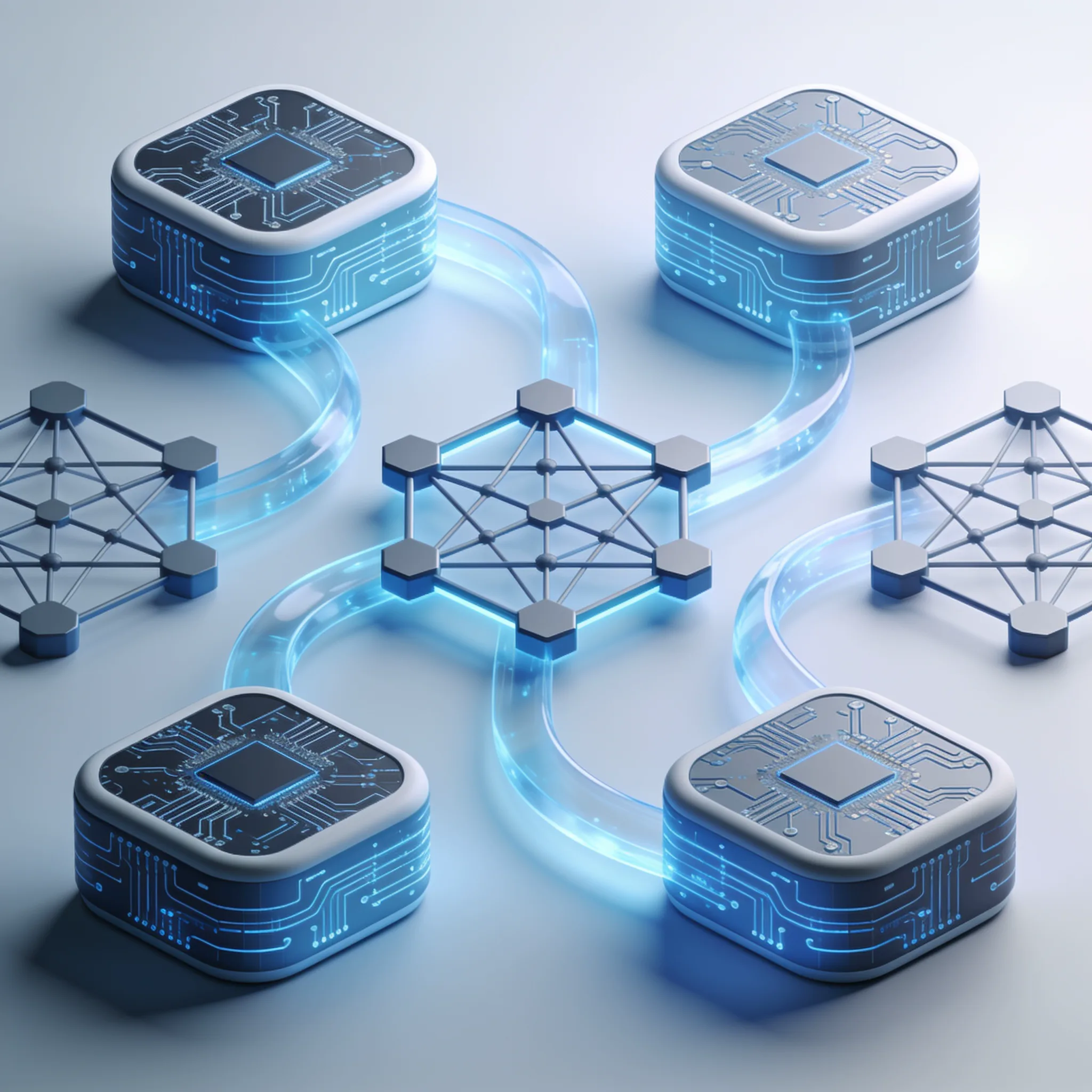
The mental model for Claude agent building is straightforward. The SDK is the loop, tools/MCP are what the agent can do, and Skills are what it knows how to do, which provides a clean separation of concerns. The Claude Agent SDK provides an agent loop (gather context, call model, run tool, feed result back, repeat) programmable in Python or TypeScript.
LangGraph offers more control. It lets you define explicit graph nodes for logic, and you can use it to build strict guardrails that prevent the model from running rogue tool calls.
The orchestration layer provides essential guardrails keeping agents on task, which can be hardcoded using tools like LangGraph or handled using GUI tools such as Cursor Automations. Without orchestration, an agent will loop infinitely on a single error. Secure credential management is critical.
And never hardcode API keys in your system prompt, because injecting them at runtime via environment variables is the only safe approach for production systems.
We prefer LangGraph for complex routing. It forces you to think about state transitions, while the Claude SDK is better for rapid prototyping and tool-heavy tasks that require quick iterations.
{
 "orchestration": {
 "guardrails": {
 "max_iterations": 5,
 "timeout_seconds": 30
 },
 "secrets_manager": {
 "provider": "aws_secrets_manager",
 "keys": ["ANTHROPIC_API_KEY", "FIRECRAWL_API_KEY"]
 }
 }
}
Step 3: Implement Tools, Web Access, and Memory Management
AI agents use MCP (Model Context Protocol), CLI tools, and frameworks like LangChain to access tools. Knowing how to build custom AI agents means knowing how to ground them in reality. AI agent knowledge needs to be grounded in reality and real-time data; without it, knowledge is limited to memory stores and training data.
Built-in fetch tools offered by companies like OpenAI and Anthropic offer only limited web access, necessitating dedicated web access tools like Firecrawl. Fetching raw HTML wastes context and confuses the model.
Firecrawl provides three main endpoints for web access: /search (live web searches), /scrape (fetch sites as structured data/Markdown), and /interact (open a real browser to click buttons and fill forms).
Clean extraction via Firecrawl yields roughly 2,788 tokens of clean Markdown on a typical page instead of 38,381 tokens of raw HTML. Firecrawl returns 94 percent fewer input tokens than fetching raw HTML. This directly improves agent performance.
Raw web pages can change structure and contain irrelevant navigation or scripts. Prefer a documented structured endpoint when available, and test extraction against representative pages and layout changes.
import requests


def search_web(query: str):
    response = requests.post("https://api.firecrawl.dev/v1/search",
        json={"query": query, "limit": 5},
        headers={"Authorization": f"Bearer {API_KEY}"})
    return response.json()


def scrape_site(url: str):
    response = requests.post("https://api.firecrawl.dev/v1/scrape",
        json={"url": url, "formats": ["markdown"]},
        headers={"Authorization": f"Bearer {API_KEY}"})
    return response.json()
Memory is essential for long-running AI systems because all models operate on a finite context window which resets upon hitting the limit. AI models operate on a finite context window, such as 200,000 tokens, before resetting and needing context rebuilt using memory.
You must store conversation history and state in an external database. When the context window fills, you retrieve a summary and relevant facts. Then you rebuild the prompt. Never assume the model remembers anything beyond its current input.
Building with AI models? AIGROW API credit runs Claude, GPT and Grok models up to 75% below list price.
How Do You Manage Costs, API Keys, and Testing?
If you run five agents simultaneously, you pay for five model calls at once, while Single Agents cost less per run but take significantly longer to finish. You must balance speed against budget. Let us break down a worked example for a mid-volume support agent, assuming 10,000 runs per month where the manual cost is $5 per ticket, totaling $50,000.
The automated cost breaks down differently.
Hosting is $100. Break-even happens almost immediately. Testing the agent wrapper is non-negotiable, meaning you must simulate tool failures and aggressively test timeout logic before pushing anything to production.
Agent Cost Calculator
Estimate monthly variable costs for an AI agent based on token volume and search calls.
We use deterministic test cases for the wrapper and probabilistic evaluation suites for the model, and we never deploy an agent without testing its error recovery paths. Stop bloating system prompts. Agent Skills are folders containing a SKILL.md file that teach the agent specialized work, loaded on demand via progressive disclosure to keep your context window clean.
If you want to master how to build custom AI agents, you must separate your concerns.
The Uncommon Insight: Why Procedural Knowledge Belongs in Skills

The mental model for Claude agent building is clear: the SDK is the loop, tools/MCP are what the agent can do, and Skills are what it knows how to do. Tools are verbs, and Skills are manuals. When you dump all instructions into the system prompt, you waste context because the model reads instructions it does not need for the current task.
Progressive disclosure solves this. The agent loads the SKILL.md file only when it needs to perform that specific task, which keeps the context window lean and reduces hallucinations. It also makes your agents modular.
And you can update a skill without touching the core orchestration logic.
Agent Readiness Assessment
Evaluate your team's readiness for deploying production AI agents.
How do you handle procedural knowledge for your agent?
The newest Claude, GPT and Grok models, up to 75% below list price
One API key for Claude, GPT and Grok models. It works with the OpenAI and Anthropic SDKs and with Claude Code.
Each model’s rate through AIGROW credit sits beside its maker’s list price, never above it.
Frequently Asked Questions
