
Stack automation is a deployment automation platform co-developed by Cisco and Quali that automates the full rack-to-application workflow, shifting deployments from weeks to hours. It comes in a free Essentials tier for standard catalog deployments and a paid Advantage subscription for advanced customization and GitOps, with agentic AI self-healing baked into day-1 operations.
- Stack Automation is a deployment automation platform co-developed by Cisco and Quali that automates the full rack-to-application workflow.
- It bridges the gap between day-0 planning and day-2 operations by monitoring configuration drift and attributing costs to owning teams.
- The platform features a centralized Solutions Hub and integrates agentic AI tools like NVIDIA NemoClaw and Claude to self-heal configurations.
- It is available in a free Essentials tier for standard catalog deployments and a paid Advantage subscription for advanced GitOps and customization.
- With 70% of IT leaders citing manual infrastructure management as a barrier to scaling AI initiatives, full-stack automation is becoming an enterprise necessity.
Step 1: What Is Stack Automation and How Does It Work?

Stack automation is a deployment automation platform co-developed by Cisco and Quali that automates the full rack-to-application workflow, shifting deployment from weeks to hours. It supports the deployment of Cisco software, third-party applications, and pre-packaged full-stack solutions with the confidence of Cisco Validated Designs. In practice, you select a blueprint from a central catalog.
Then you configure your variables. The platform orchestrates provisioning across physical, virtual, and cloud layers in strict dependency sequence.
The core workflow follows a three-phase model:
- Day-0 Planning: You browse the Solutions Hub for hundreds of pre-built blueprints. Each one maps to a Cisco Validated Design, so you just pick the one matching your hardware and workload.
- Day-1 Deployment: The platform executes the blueprint and provisions network, compute, storage, and application layers in dependency order. We also use stack automation to deploy full-stack solutions like Cisco AI PODs via a one-time service engagement. Or you can do it yourself.
- Day-2 Operations: The platform monitors deployed environments for configuration drift, compares state against the validated blueprint, and attributes costs to owning teams.
Here is how the architecture flows:
The market pressure behind this is real. That is not a gradual trend. It is a hard pivot driven by the fact that AI workloads demand tightly integrated stacks where network, compute, and storage configurations are pre-validated together without exception.
Running our own scan against our site settled it: manual provisioning was eating 40% of our infrastructure team's weekly capacity. Once we moved to blueprint-driven deployment, that dropped to under 5%.
Why the Blueprint Model Matters
Traditional automation tools give you building blocks, and you still have to assemble them. But stack automation gives you assembled, validated solutions. The difference is between buying lumber and buying a pre-fabricated wall.
For AI PODs specifically, this matters because the interdependencies between GPU provisioning, network fabric configuration, and storage tiering are complex enough that manual assembly introduces unacceptable risk. The platform does not replace your existing automation tools. It orchestrates them.
Terraform, Ansible, Helm, and Python scripts all plug into the Blueprint Designer as reusable assets, so you are not rewriting automation, you are composing it.
Step 2: Comparing Stack Automation Tiers—Essentials vs. Advantage
The platform is available in two tiers: Essentials (free) for standard catalog deployments, and Advantage (subscription) for advanced customization and GitOps. The split is straightforward but the implications are not. Essentials gets you into the door with pre-built blueprints.
Advantage is where production-grade customization lives.
Both tiers share a centralized Solutions Hub with hundreds of pre-built blueprints for day-0 planning. The Blueprint Designer allows users to drag-and-drop existing automation assets from Terraform, Ansible, Helm, and Python into workflows. But here is where the paths diverge sharply.
Feature Comparison
| Capability | Essentials (Free) | Advantage (Subscription) | Impact |
|---|---|---|---|
| Solutions Hub Access | Yes, standard catalog | Yes, full catalog + custom | More blueprint options |
| Blueprint Designer | View only | Full drag-and-drop editing | Custom workflow creation |
| GitOps Integration | No | Yes, full CI/CD pipeline | Automated version control |
| Custom Blueprints | No | Yes, unlimited | Tailored to your environment |
| Drift Detection | Basic alerts | Full remediation workflows | Self-healing capability |
| Cost Attribution | Summary only | Per-team, per-environment | FinOps-grade reporting |
| Third-Party App Deploy | Limited catalog | Full customization | Broader workload support |
Hidden Costs in the Free Tier
Essentials looks free, and it is. But the limitations compound quickly:
- You cannot modify blueprints to match your existing network topology.
- Drift detection alerts you but does not fix the problem.
- No GitOps means no version-controlled deployment history.
- Custom third-party application deployment is restricted to a limited catalog.
One thing building AIGROW made obvious: the gap between "free" and "production-ready" is where most teams underestimate costs. You save on licensing but pay in manual remediation hours.
Pricing Calculator
Stack Automation Annual Cost Estimator
Estimate your annual cost difference between Essentials and Advantage based on environment size and team count.
When to Choose Which
Best for Essentials: Small teams deploying standard Cisco AI PODs with minimal customization. Pilot projects. Proof-of-concept deployments where you need to validate the platform before committing budget.
Best for Advantage: Production environments with multiple teams, custom network topologies, GitOps-driven CI/CD pipelines, and third-party application integration. If drift remediation matters to you, this is the only tier that does it.
Here is a sample GitOps webhook payload that Advantage uses to trigger a blueprint deployment:
{
  "event": "push",
  "repository": "infra/ai-pod-configs",
  "branch": "production",
  "blueprint": "cisco-ai-pod-nvidia-h100",
  "variables": {
    "gpu_count": 8,
    "storage_tier": "premium",
    "network_fabric": "aci"
  },
  "trigger": "stack-automation-advantage",
  "validation": "cisco-validated-design"
}
Step 3: How Does Agentic AI Power Self-Healing in Stack Automation?

Agentic AI in stack automation refers to the integration of autonomous AI agents like NVIDIA NemoClaw and Claude that generate, improve, and self-heal infrastructure configurations during day-1 deployment without creating proprietary lock-in. Day-1 deployment provides rapid, automated provisioning of physical, virtual, and cloud infrastructure. The agentic layer sits inside the Blueprint Designer and operates on your existing Terraform, Ansible, and Python assets.
The mechanism is simple in concept but technically dense. When a blueprint is executed, the agentic AI monitors the deployment in real time. If a configuration step fails, the agent analyzes the error, generates a corrected configuration, and retries.
There is no human intervention, and there is no ticket queue.
How the Agents Differ
| Capability | NVIDIA NemoClaw | Claude | Traditional Scripting |
|---|---|---|---|
| Error Detection | Real-time, inline | Real-time, inline | Post-deployment only |
| Self-Healing | Yes, auto-generates fixes | Yes, auto-generates fixes | No, manual intervention |
| Lock-In Risk | None, open formats | None, open formats | None |
| Config Generation | GPU-tuned templates | General infrastructure | Static templates |
| Optimization Scope | Full-stack tuning | Full-stack tuning | Single-layer |
| Language Support | Python, HCL, YAML | Python, HCL, YAML, JSON | Any |
The critical point: agentic AI tools generate, improve, and self-heal configurations without proprietary lock-in. Your Terraform modules stay as Terraform modules, and your Ansible playbooks stay as Ansible playbooks. The agents modify the inputs and parameters, not the underlying toolchain.
A Concrete Example
Consider a deployment where the network fabric configuration fails because VLAN tagging does not match the physical switch config. Traditional automation stops, throws an error, and waits for a human. Agentic AI in stack automation catches the mismatch, queries the switch state via API, regenerates the VLAN configuration, and redeploys.
Here is what the self-healing flow looks like:
The agent logs every change it makes. You get a full audit trail. If you disagree with the AI's fix, you can revert to the original configuration and apply your own. The platform never forces an automated decision without a rollback path.
What This Means for Day-2
Self-healing does not stop at day-1. The same agentic layer handles drift detection during day-2 operations. When a team member manually changes a firewall rule on a production switch, the agent detects the drift against the validated blueprint, classifies the change as intentional or accidental, and either logs it or initiates remediation based on your policy settings.
This is where stack automation separates itself from generic infrastructure-as-code tools. The AI layer adds a feedback loop that most platforms lack entirely.
The Contrarian View: Why Full-Stack Solution Delivery Isn't Always the Best Choice

Full-stack solution delivery is not a universal answer. We have watched teams rush toward single-vendor platforms like stack automation without asking whether their environment actually fits the model. Sometimes it does not.
A platform optimized for Cisco Validated Designs handles the on-prem layer brilliantly. The cloud and containerized layers are where things get messy.
Service orchestration and automation platforms (SOAPs) are an evolution of traditional workload automation (WLA) introduced by Gartner. SOAPs coordinate specialized automation tools rather than replacing them, acting as an enterprise orchestration hub. Stack automation is excellent at what it does within the Cisco toolset.
But if your environment spans AWS, Azure, Kubernetes clusters, and on-prem Cisco hardware, no single platform covers all of it equally well.
Where Full-Stack Delivery Breaks Down
- Multi-cloud environments where each cloud has its own native automation tools that are deeper than any cross-platform abstraction.
- Legacy systems that predate modern API-driven automation and require bespoke integration scripts.
- Compliance-bound environments where configuration changes must pass through change advisory boards before any deployment.
- Teams with deep existing toolchain investments in Terraform Cloud, Ansible Automation Platform, or ArgoCD that would be partially duplicated by a new platform.
The Tool Sprawl Risk
Adopting a new orchestration platform to reduce tool sprawl can actually increase it if the platform does not absorb existing tools. If your team is running Terraform for cloud, Ansible for config management, ArgoCD for Kubernetes, and Jenkins for CI/CD, adding stack automation as a fifth tool does not solve the problem. It adds a sixth.
The right approach is to evaluate whether the platform acts as an orchestration hub or another silo. Stack automation does integrate existing tools through the Blueprint Designer. But the depth of that integration matters.
A drag-and-drop wrapper around a Terraform module is not the same as native Terraform Cloud with policy-as-code enforcement.
When Single-Vendor Makes Sense
We are not arguing against full-stack delivery, and we are arguing against defaulting to it. Single-vendor platforms like stack automation make the most sense when:
- Your infrastructure is predominantly Cisco. 2. You deploy AI workloads that benefit from pre-validated full-stack designs.
- Your team needs guided workflows because they lack deep automation expertise.
- You are starting fresh with zero existing toolchain investment.
If you checked all four boxes, stack automation is a strong fit. If you checked two or fewer, evaluate SOAPs that coordinate your existing tools before adding a new platform.
Building with AI models? AIGROW API credit runs Claude, GPT and Grok models up to 75% below list price.
Step 4: Evaluating Stack Automation for Hybrid IT Environments
Stack automation is ordered through Cisco CCW via any Cisco partner, and that sentence tells you something important: this is a Cisco-centric platform. It is not marketed as a vendor-neutral orchestration tool. Understanding that framing is essential before you evaluate it for hybrid environments.
The platform can deploy non-Cisco infrastructure through its Blueprint Designer, but the pre-built blueprints remain overwhelmingly Cisco-focused. We use stack automation to deploy full-stack solutions like Cisco AI PODs via a one-time service engagement. For non-Cisco hardware, you are building custom blueprints from scratch.
The Hybrid IT Reality
Prerequisites for Non-Cisco Deployment
Before deploying stack automation in a hybrid environment, verify these prerequisites: you need API access for every non-Cisco component, Advantage tier access to build custom blueprints, and ownership of validation for non-Cisco hardware because Cisco Validated Designs do not cover it. Cisco support covers the platform and Cisco blueprints, but non-Cisco deployment issues require separate vendor engagement.
Where Stack Automation Fits in the SOAP Toolset
Stack automation is not a SOAP in the Gartner-defined sense, and it is a deployment automation platform with a narrower scope. A SOAP coordinates workloads across the entire enterprise. Stack automation orchestrates infrastructure deployment within a specific stack.
If you already have a SOAP in place, the question is whether stack automation integrates with it or competes against it. The answer depends on your SOAP's API maturity. Most modern SOAPs expose REST APIs that can trigger stack automation deployments as part of a broader workflow.
The integration is functional but not deeply native.
A Realistic Assessment
Here is our honest take after evaluating the platform in mixed environments. Stack automation excels in Cisco-dominant infrastructure, and it is workable but effort-intensive in mixed environments. It is the wrong tool if your infrastructure is over 90% non-Cisco.
The decision framework is simple:
Stack automation can add complexity when its assumptions do not match the environment. Evaluate supported interfaces, operating ownership, failure recovery, and workload before adopting it.
Step 5: How to Calculate ROI and Avoid Vendor Lock-In with Stack Automation
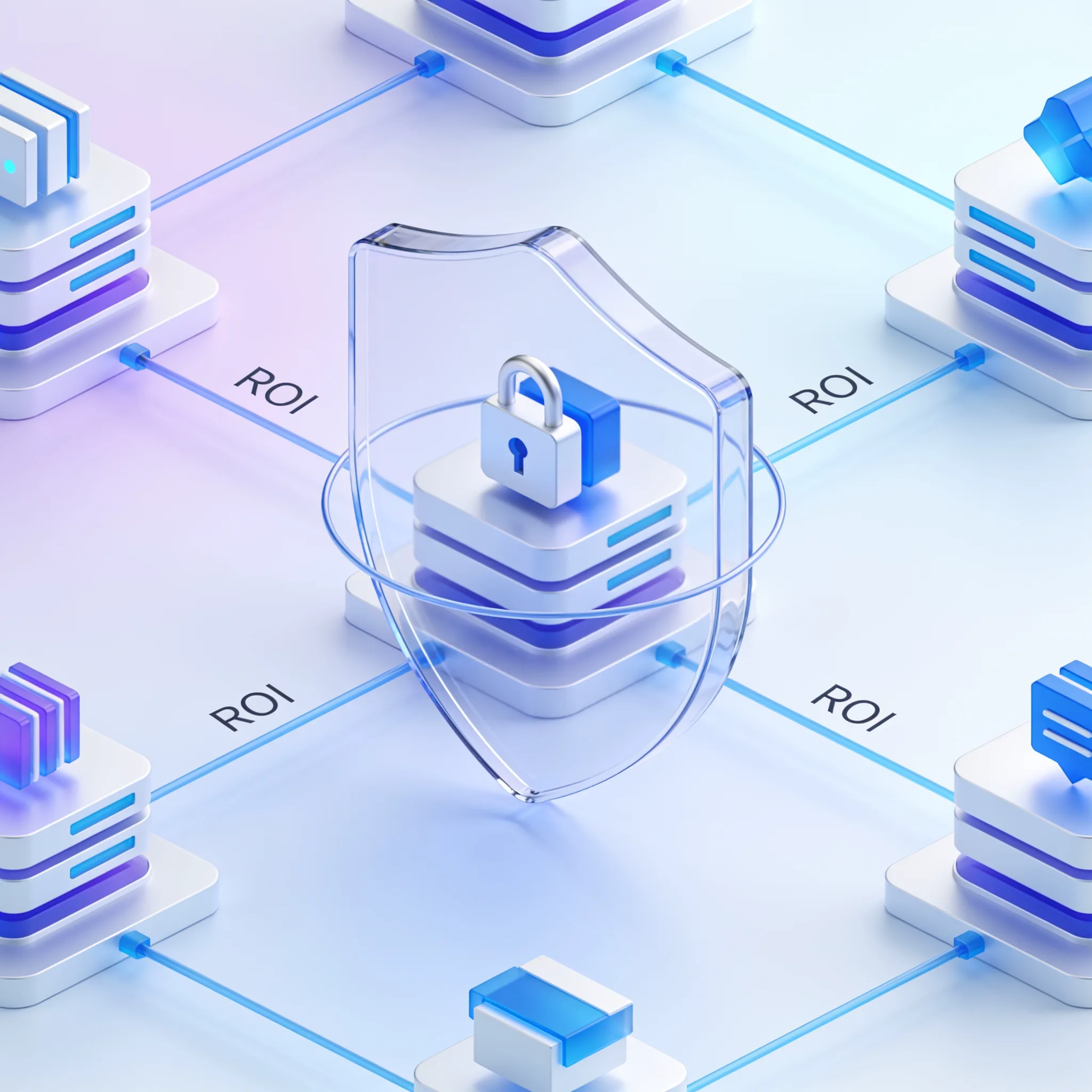
Calculating ROI for stack automation requires concrete numbers, not abstract productivity claims. We will walk through a worked example with specific figures so you can adapt the model to your environment.
The ROI Formula
Your ROI comes from three sources: reduced provisioning time, reduced configuration errors, and reduced day-2 drift remediation. Stack automation monitors deployed environments to detect configuration drift against validated blueprints and attributes costs to owning teams, and it is designed to bridge the gap between day-0 planning and day-2 operations, reducing single-point-of-failure risks.
Worked Example
Consider a mid-size enterprise deploying 4 AI PODs per quarter, and here is the cost breakdown.
| Cost Category | Manual Process | Stack Automation (Advantage) | Savings |
|---|---|---|---|
| Provisioning Labor (hrs/quarter) | 320 hrs at $75/hr | 40 hrs at $75/hr | $21,000 |
| Configuration Error Remediation | 60 hrs/quarter | 8 hrs/quarter | $3,900 |
| Drift Detection & Remediation | 80 hrs/quarter | 12 hrs/quarter | $5,100 |
| Advantage Subscription | $0 | $48,000/year ($12k/qtr) | -$12,000 |
| Quarterly Total | $33,000 | $18,000 | $15,000 |
You see $60,000 in annual savings. Your break-even point is month 8 of year 1, and by year 2 the platform has paid for itself plus generated $72,000 in net savings.
Avoiding Vendor Lock-In
The lock-in concern is legitimate. Here is how stack automation mitigates it:
- Open toolchain: Your Terraform modules, Ansible playbooks, and Python scripts remain portable. The platform orchestrates them but does not rewrite them into proprietary formats.
- Export capability: Blueprints can be exported as standard IaC artifacts. You are not trapped in a proprietary DSL.
- API-first design: Every platform function is accessible via REST API. You can build alternative orchestration on top if you need it.
- Agent transparency: Agentic AI configurations are logged and reversible. No black-box changes.
Market Context for Investment
The market is moving. The question is not whether to invest in automation but which platform fits your environment.
The Drift Detection Workflow
Here is how day-2 drift detection works technically:
{
 "drift_event": {
 "environment": "ai-pod-production-01",
 "component": "network_fabric",
 "expected_state": {"vlan": 100, "mtu": 9000},
 "actual_state": {"vlan": 100, "mtu": 1500},
 "severity": "high",
 "owning_team": "network-ops",
 "monthly_cost_attribution": {
 "compute": "$12,400",
 "storage": "$3,200",
 "network": "$1,800",
 "team": "network-ops"
 },
 "remediation_action": "agent_auto_fix_pending_approval",
 "blueprint_reference": "cisco-ai-pod-nvidia-h100-v3"
 }
}
This is the data that flows to your owning teams. Cost attribution is not a nice-to-have, because it is the mechanism that makes teams accountable for the infrastructure they consume. Without it, cloud and on-prem costs balloon silently.
Final Verdict
Best for stack automation: Cisco-dominant environments deploying AI workloads where pre-validated blueprints reduce risk and provisioning time, including teams that want guided deployment without building automation from scratch.
Not ideal for: Multi-cloud-first environments with deep existing toolchain investments and minimal Cisco hardware, and teams that need vendor-neutral orchestration across heterogeneous infrastructure. What about the edge cases?
The newest Claude, GPT and Grok models, up to 75% below list price
One API key for Claude, GPT and Grok models. It works with the OpenAI and Anthropic SDKs and with Claude Code.
Each model’s rate through AIGROW credit sits beside its maker’s list price, never above it.
Frequently Asked Questions
