
A scalable automation stack needs more than an orchestrator and a model. Define queues, retries, idempotency, permissions, monitoring, cost controls, backups, ownership, and recovery for one workflow first. Self-hosting can reduce license fees while increasing engineering work, so compare total operating cost and reliability before adding more components.
- A scalable stack needs explicit ownership, queues, retries, idempotency, monitoring, cost controls, and recovery procedures.
- Self-hosted software shifts cost into infrastructure, upgrades, security, backups, and on-call work. Include that labor in comparisons.
- Start with one workflow and add components only when they remove a measured constraint or improve reliability.
Step 1: How Do You Architect an Automation Stack for General Business Operations?

Self-hosted orchestration creates uptime, security, upgrade, and recovery work. Run a representative workload and record dropped events, incidents, and maintenance time before choosing it.
A stack using n8n, Claude Code, and DataForSEO can handle scheduled SEO audits, rank tracking pipelines, content publishing, and site health checks without you touching a button. This same architecture applies to general operations too. You pull a new lead from your website, pass it to Claude for qualification, and push the enriched data straight into Salesforce.
Here's the system flow we use for routing operational data. This setup handles sales, customer onboarding, and internal reporting without anyone babysitting it. The n8n server acts as the central hub.
It receives triggers from your frontend or CRM.
It then calls a Claude agent to process or format the payload before routing the output to the correct downstream API. To build this, you must follow a strict setup sequence. Open source isn't free. It's a different cost, and anyone who tells you otherwise is selling you something.
Competitors love emphasizing cost reduction metrics, but they conveniently gloss over the setup complexity and maintenance overhead that comes with self-hosted instances (which is where most teams quietly give up).
- [ ] Provision a $5/month VPS on your preferred cloud provider
- [ ] Install n8n using Docker Compose for isolated orchestration
- [ ] Connect your primary database as an n8n credential
- [ ] Build the first webhook trigger for inbound lead capture
- [ ] Add a Claude Code node to qualify the lead payload
- [ ] Route qualified leads to your CRM API
- [ ] Set up error fallback workflows for failed API calls
- [ ] Monitor execution logs for the first 48 hours
Why the "Free" Open-Source Automation Stack Costs More Than You Think
They paint a picture of zero-dollar software running flawlessly on magic. We know the reality, and it's not pretty at 2 AM when a node module conflict breaks your entire pipeline.
The math looks incredible on a spreadsheet. But that spreadsheet doesn't account for your engineer's weekend hours, the version control headaches, or the SSL certificate renewals that somehow always expire at the worst possible moment. When you self-host an automation stack, you own the infrastructure.
We don't discourage self-hosting, but we absolutely discourage naive self-hosting. You must budget for developer time, or the stack will bleed you dry through invisible maintenance.
If your lead engineer spends 4 hours a week managing the server, your $52 stack actually costs $452 (assuming $100/hour, which is conservative for a competent DevOps engineer). Calculate the total cost of ownership before migrating away from SaaS. The hidden debugging complexity is the real killer here.
A SaaS platform handles API rate limit changes for you, and when Google changes their API schema, Zapier pushes an update that you never even see.
In your self-hosted stack, the workflow breaks at 2 AM and your on-call developer drags themselves out of bed to fix it. You must weigh the flexibility of open source against that burden of maintenance. Do not build this stack if your team lacks basic DevOps skills.
Buy the SaaS subscription instead and sleep through the night.
The 19x cost reduction is only real if your infrastructure stays stable, and stability doesn't come from wishful thinking. Model Context Protocol is an open standard from Anthropic that defines how an AI assistant calls external tools and data sources, letting your LLMs retrieve live data instead of guessing. This stops hallucinations dead in their tracks.
We build MCP servers to give our agents direct access to business databases and external APIs.
Step 2: Implementing Model Context Protocol for Live Data Retrieval
Model Context Protocol is an open standard introduced by Anthropic that defines how an AI assistant calls external tools and data sources, allowing LLMs to retrieve live data instead of guessing. We implement MCP servers to give our AI agents direct access to business databases and external APIs. This stops hallucinations dead in their tracks.
SEO platforms like Ahrefs and SEMrush now ship MCP servers. This allows developers to build interchangeable data sources into their automation stacks. Your agent can query live SERP data, keyword volumes, and competitor backlinks directly. It no longer relies on stale training data from 2024.
A complete SEO automation pipeline using AI and MCP involves 7 steps:
- Keyword qualification via live search volume APIs
- Search intent mapping using Claude to classify queries
- Competitor content extraction from top ranking pages
- Content gap analysis comparing your site to competitors
- Outline generation based on the missing semantic entities
- Drafting against the outline using the Claude Code agent
- Quality control checks for factual accuracy and flow
This protocol changes how you build templates. You no longer hardcode API calls inside your n8n workflow. You expose the API as an MCP server. You then tell Claude Code which servers are available. The model decides when to call the tool based on the task prompt.
This architecture is incredibly flexible. If you switch from Ahrefs to SEMrush, you just swap the MCP server endpoint. Your workflow logic remains untouched. The AI agent adapts its tool calls automatically. This creates a modular automation stack that survives vendor changes.
Step 3: Evaluating Total Cost of Ownership Across SaaS and Self-Hosted Stacks
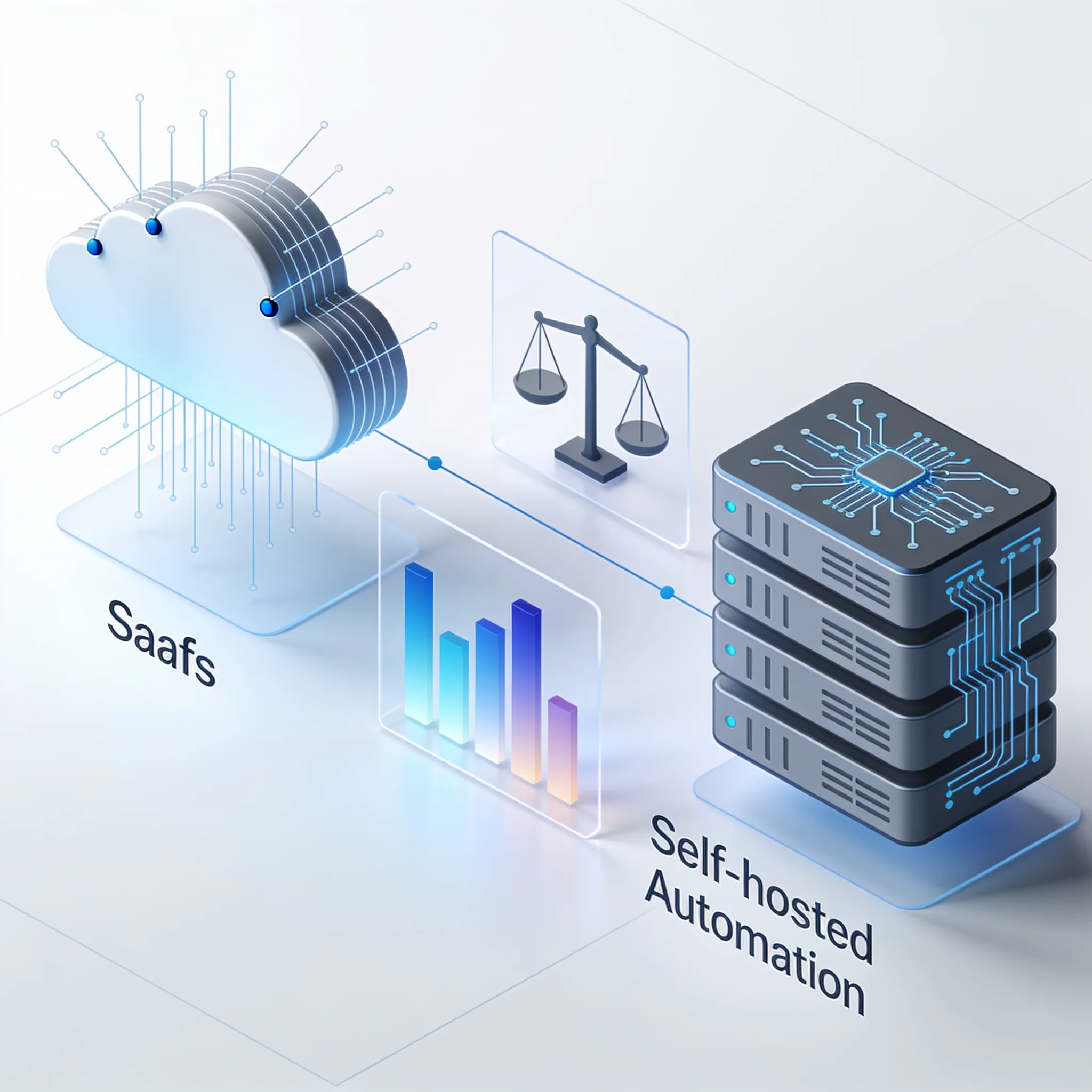
Open-source wins on scale and custom logic. We pull SERP data and site audits using the DataForSEO API (about $30/month on a pay-per-use basis). Google Search Console API gives us free first-party ranking and click data to validate our automation stack outputs.
Here's how a standard SaaS stack compares to our self-hosted architecture:
To understand the ROI, look at a specific JSON payload we send to DataForSEO from our n8n workflow, because this payload drives our entire keyword research pipeline.
The cost savings are massive when you scale this.
| Feature | Standard SaaS Stack | Self-Hosted n8n Stack |
|---|---|---|
| Base Cost | $980 / month | $52 / month |
| API Call Limits | Strict tier limits | Governed by your provider |
| Custom Logic | Limited to basic filters | Full JavaScript / Python |
| Maintenance | Handled by vendor | Requires internal DevOps |
| Data Privacy | Hosted on vendor servers | Stored on your own VPS |
Managing an automation stack at scale requires strict protocols for API rate limits, data privacy, and automated recovery.
{
 "version": "v3",
 "method": "KeywordsData/KnowledgeGraph/Search",
 "params": {
 "keyword": "automation stack",
 "depth": 10,
 "limit": 50
 }
}
Unhandled rate limits and silent API timeouts can break workflows without immediate notice. Build retries, idempotency, alerts, dead-letter handling, and a documented recovery path into the orchestration.
Automation Stack TCO Calculator
Compare your current SaaS operations cost against a self-hosted automation stack.
Building with AI models? AIGROW API credit runs Claude, GPT and Grok models up to 75% below list price.
Step 4: How Do You Manage API Rate Limits, Security, and Recovery at Scale?
Quality control in AI automation stacks must include prompts that audit generated drafts for hallucinated statistics or invented quotes. Every data claim must cite a real retrieved figure. You can't trust the model to police itself, because it simply won't.
You build a secondary validation node in your workflow to catch these issues. Google’s Indexing API accepts notifications only for pages with JobPosting or BroadcastEvent embedded in a VideoObject. Use internal links and a sitemap for ordinary pages; neither guarantees a crawl time.
Automation stacks can also automate browser tasks using tools like Claude Code and the Playwright MCP Server. This means your agent can interact with websites that lack public APIs entirely.
To secure your stack, create these operational steps. Don't skip the Dead Letter Queue. When a workflow fails at 2 AM, the payload must sit in a database table where a secondary workflow processes it every morning.
- Store all API keys in n8n encrypted credential storage, never in plain text nodes
- Create exponential backoff retries for any HTTP request node
- Route sensitive customer data through private subnets only
- Set up Dead Letter Queues for failed workflow executions
- Audit agent prompts monthly to prevent prompt injection attacks
- Restrict Playwright browser agents to whitelisted domains
If you don't build this, you lose data permanently. How ready is your infrastructure for this kind of load? Find out where you stand. Scaling content production requires a shift from manual writing to template-driven agent orchestration.
A team can evaluate open-source research tools against its actual Ahrefs usage, data quality needs, support requirements, and total operating cost before switching.
Deploying n8n and Claude Code for Industrial Content Pipelines
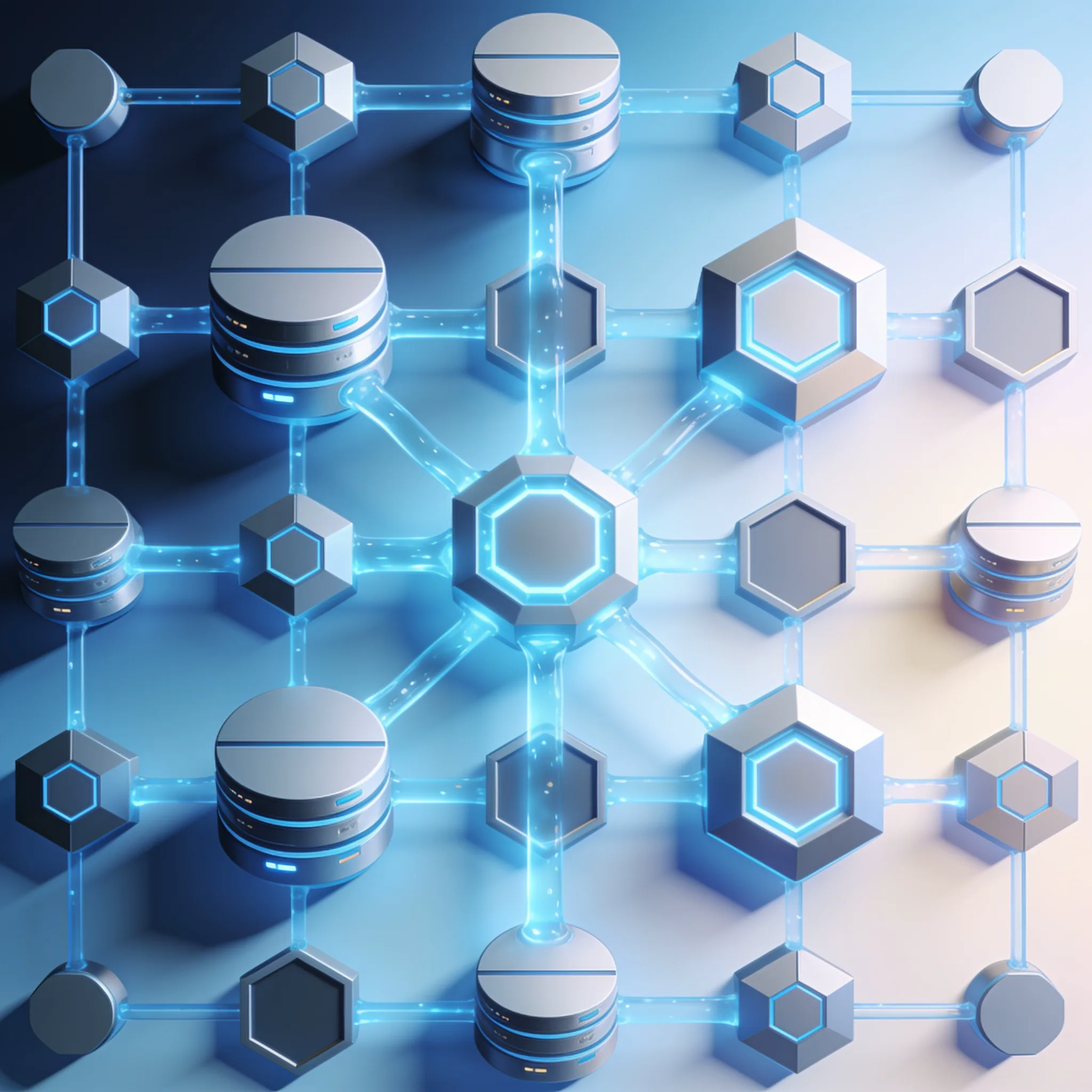
We use claude-seo, an open-source SEO auditing tool that runs as a Claude Code skill and handles 186 different SEO checks in a single audit. It's accumulated 2,974 stars on GitHub. Not bad for a community project.
It replaces expensive monthly subscriptions while giving us deeper programmatic control over every single check. Rankenstein is an n8n-based SEO automation system built to automate SEO processes end to end, and we deploy it alongside claude-seo to manage the content pipeline from keyword to publish. The n8n server triggers the Claude Code agent, which reads the RAG database to find internal linking opportunities, drafts the article, runs the claude-seo audit, and publishes the page.
That's the full pipeline.
Here's the deployment sequence we use. As Andrew Ng put it at Stanford GSB, "AI is the new electricity." But electricity needs a grid. Your n8n workflow is that grid, and it moves the power from the AI model to your business operations.
- Populate the RAG vector database with existing company documentation
- Configure the Rankenstein n8n template with your CMS credentials
- Install the claude-seo skill in your Claude Code environment
- Trigger the first content generation workflow via webhook
- Review the 186-point SEO audit report generated by the agent
- Approve the draft for automatic publishing to your CMS
- Notify Google through its Indexing API only for eligible job or livestream pages; use a sitemap for ordinary pages
The newest Claude, GPT and Grok models, up to 75% below list price
One API key for Claude, GPT and Grok models. It works with the OpenAI and Anthropic SDKs and with Claude Code.
Each model’s rate through AIGROW credit sits beside its maker’s list price, never above it.
Frequently Asked Questions
