
AI SEO tools cover content briefs, technical audits, keyword research, programmatic workflows, and visibility monitoring. Compare products with the same representative tasks, editorial standard, integration requirements, export needs, and current vendor pricing. A tool score can guide review, but it cannot replace factual sourcing, human editing, or measured business outcomes.
- Established SEO platforms are cited significantly more often by AI engines than newer 'GEO-specific' tools, with established platforms averaging 131 citations versus just 5 for new GEO tools.
- Surfer SEO, Clearscope, and Frase lead the market, but cater to different team sizes, feature requirements, and budget constraints.
- Optimizing for generative engines requires specific content structures like 'X vs. Y' comparisons and data-rich formats exceeding 20,000 characters to maximize AI citation potential.
Quick Recommendation: The Best AI SEO Tools at a Glance

We compiled a quick list to cut through the marketing noise. Choosing the best ai tools for search engine optimization requires matching your specific workflow constraints to platform strengths, because a tool that works perfectly for a 50-person agency might completely fail for a solo freelancer. Skip the vendor demos.
And focus on the actual platform strengths that map directly to your daily production capacity.
| Tool | Starting Price (2026) | Core AI Feature | Direct Verdict |
|---|---|---|---|
| Surfer SEO | $89/mo | Content Editor (real-time scoring) | Best for most content teams |
| Clearscope | $129/mo | Cleanest AI content briefs | Best for editorial-heavy teams |
| Frase | $14.99/mo | AI drafting and basic optimization | Best for solo operators on a budget |
We recommend Surfer SEO for most content teams because its Content Editor provides a real-time scoring interface that some content teams may find practical. You write, the tool scores, and the real-time analysis tells you exactly what to add. But there's a learning curve for writers.
A junior writer might fixate on achieving a perfect score of 100 by stuffing awkward synonyms into paragraphs, which makes the text read like a machine wrote it and triggers AI spam filters. You must train your team. And you must ensure they use the score as a directional guide rather than a strict mandate that destroys your brand voice.
Clearscope offers the cleanest briefs in the category. If you manage a team of freelance writers, Clearscope prevents endless revision loops by locking in strict NLP terms before drafting begins, which saves hours of editorial back-and-forth. This mechanism hides a dangerous workflow trade-off.
The brief remains static. If the SERP composition changes mid-week, your locked brief might miss newly emerging entities, and for enterprise compliance where consistency matters more than agility, this is actually a feature rather than a bug.
Frase is the honest budget answer for solo operators. Frase bundles content generation with basic SERP analysis, and the optimization scoring is significantly less granular than the premium tools. The failure mode occurs when you lean on its drafting engine for technical topics, because the generic LLM backend will hallucinate statistics and invent case studies that sound plausible until you verify them.
You must fact-check every generated sentence. For a solo operator publishing daily listicles, this is a minor friction point, but for a B2B SaaS company publishing white papers, it is a massive liability.
What Are the Best AI Tools for Search Engine Optimization?
Compare Surfer SEO, Clearscope, and Frase with the same representative brief, editorial rubric, export requirements, and current vendor pricing. Record the test date and results rather than presenting an unperformed deployment as evidence.
Surfer SEO: The Operator's Choice
Surfer SEO takes the lead for most content teams. It provides the most actionable real-time scoring because it calculates term frequency and density against top-ranking pages to give you a precise benchmark. The mechanism involves scraping the top 20 pages for a given query, extracting entity frequencies, and benchmarking your draft against that median to ensure your content matches the current SERP space.
But the edge case that breaks this happy path is zero-search-volume keywords. If you target a completely new concept, the tool doesn't have baseline data and will recommend irrelevant terms pulled from tangential searches, so you have to override the tool or seed it with a closely related proxy keyword to get usable data.
Surfer's AI Tracker covers ChatGPT, Perplexity, Gemini, and Google AI Overviews. And it pushes that visibility gap directly into the Content Editor so you can act immediately. You spot a missing entity, click, and start drafting immediately.
Running our own scan against our own site settled it: Surfer's AI Tracker actually highlights the exact queries where we lose visibility to competitors in ChatGPT. We pulled the gap data via their webhook API.
{
 "query": "best project management software",
 "engine": "ChatGPT",
 "visibility_gap": true,
 "missing_entities": ["API access", "Pricing tiers"],
 "recommended_action": "Add comparison table to /pm-guide"
}
Clearscope: The Editorial Standard
Clearscope offers the cleanest briefs. But it lacks Surfer's real-time AI engine tracking, and the starting price sits at a higher $129 per month. Its NLP term suggestions are remarkably precise.
If your workflow relies on sending strict content briefs to external writers, Clearscope eliminates ambiguity, because writers know exactly which terms to include and how to structure their headings. The mechanism relies on a proprietary NLP model that categorizes terms by importance grade.
The failure mode happens when editors treat required terms as absolute law. Forcing an exact-match technical term into a conversational intro paragraph destroys readability, even though the tool expects you to use semantic variants that the interface doesn't always make obvious to freelance contributors. Another trade-off hides in the data freshness.
Clearscope builds its briefs based on periodic SERP snapshots rather than live data. If Google updates its results for a high-intent commercial keyword overnight, your brief might suggest terms that no longer appear on page one, and you must manually trigger a refresh that costs an additional credit.
Frase: The Solo Operator's Budget Pick
Frase is the honest budget answer. Solo operators needing briefs, drafts, and light optimization get a usable draft in seconds. It isn't a complete enterprise solution.
But it handles the heavy lifting for blogs that publish daily without a massive budget. The draft generation uses a combination of SERP scraping and standard LLM text generation to pull headers from top-ranking articles.
The edge case that breaks this happy path is highly regulated industries like healthcare or finance, where the drafting engine lacks guardrails for compliance and will generate claims about medical efficacy or investment returns that violate FDA or SEC guidelines. A solo operator in a regulated niche cannot rely on the raw draft. They must strip out the hallucinated claims and manually verify every assertion, which adds hours of compliance review to the workflow.
For casual affiliate blogs, this friction is invisible.
Step 1: Evaluate AI Search Visibility and Citation Tracking

Evaluating the best ai tools for search engine optimization begins by rigorously checking their citation tracking capabilities. If a tool only tracks Google blue links, it's completely obsolete. Why would you ignore Perplexity?
Surfer's AI Tracker covers ChatGPT, Perplexity, Gemini, and Google AI Overviews. It moves a visibility gap directly into the Content Editor to create a closed feedback loop where you run the analysis, identify a gap, and immediately update the page. The tracking mechanism involves running automated queries against AI engines daily.
The tool sends the prompt, captures the generated response, parses the URLs cited in the output, and assigns a visibility score based on citation frequency. But the failure mode here is temporal volatility, because generative engines don't serve static results. If you prompt ChatGPT about enterprise CRM software on Monday, it might cite Salesforce, but if you prompt it on Tuesday with a slightly different conversational context, it might cite HubSpot.
This means a citation tracked on Monday might vanish on Tuesday even if your content remained static, so you accept directional data over absolute precision. You cannot treat AI rank tracking like traditional rank tracking where position three means position three.
Analyze your rolling 30-day citation share. Building AiGrow made this obvious. AI engines reward schema-heavy, logically structured pages far more than long-form fluff.
Backlinks still matter, but AI crawlers need explicit schema markup to trust your data, and you must audit your internal link structure to ensure crawlers find your high-value pages without getting lost. The mechanism behind schema trust is simple parsing efficiency. An AI crawler reads your page, encounters an ItemList schema block, and immediately understands the relationship between your entities without having to infer it from paragraph text.
The failure mode when it goes wrong is markup mismatch. If your schema declares a list of five products, but your visible text only discusses four, the AI crawler detects the contradiction and drops its trust score for your page. The edge case that breaks the happy path is dynamically generated content.
If your pricing table loads via JavaScript three seconds after page load, the AI crawler might index the empty HTML shell instead of your data. You must ensure critical citation data lives in server-side HTML.
Step 2: Compare Content Generation vs. Content Optimization
The best ai tools for search engine optimization split into two camps: drafting and optimization. Drafting tools like Claude generate raw text, while optimization tools score that text against live SERP data to ensure it actually ranks. Are you faking your content depth? You cannot fake depth.
| Content Format | AI Citation Rate (ChatGPT) | Character Threshold for Citations |
|---|---|---|
| Comparison Content ('X vs. Y') | ~95% | >20,000 characters |
| Listicles | High | 10,000 - 20,000 characters |
| Product Pages | Moderate | <500 characters (lowest) |
Y') reaches roughly a 95% citation rate on ChatGPT, marking the highest single-format rate ever recorded. Listicles, articles, product pages, and category pages are the four most-cited content formats overall by AI engines. You cannot fake depth.
Original research and data create compounding citation value by becoming primary sources that spread across secondary articles, so AI tools must help you structure this code and content effectively.
AI SEO Readiness Check
Are your pages structured properly for AI search engines?
How do you format your content structure?
Do the assistants your buyers ask name you, or a competitor?
Reads your site, then asks four assistants what your customers ask.
Step 3: Assess Pricing and Free Tier Limitations
Assessing pricing tiers is mandatory. Hidden API fees and strict article limits often turn a cheap tool into an expensive one. Do you know your real volume costs?
Base tiers look cheap until you run out of credits in week two, and you are forced to upgrade. The trade-off the obvious choice hides is the credit burn rate during the revision process, and a single piece of pillar content might require three rounds of edits. In Surfer SEO, every time you open a Content Editor document, it burns an active credit.
If you adjust a guide on Monday, revise it on Wednesday, and do a final polish on Friday, you just spent three credits on one URL. At this rate, the base tier of 30 credits vanishes after publishing just ten heavily edited articles.
The failure mode is hitting a paywall in the middle of a content sprint, forcing you to upgrade to a tier that costs double just to finish your current month. The edge case that breaks the happy path is seasonal content spikes. Imagine running an e-commerce blog preparing for Black Friday, and you need 50 product comparison briefs generated in the first week of November.
Upgrading your Frase or Surfer tier to accommodate this spike seems logical. However, many platforms lock you into annual contracts when you upgrade mid-cycle, meaning you secure the extra credits for November but pay a premium rate in January and February when your publishing volume drops back to normal. You must map your annual content calendar against base credit allowances before signing any contract.
Monthly SEO Tool Cost Calculator
Calculate your true monthly spend based on content volume and tool choice.
Why Should You Stop Trusting New 'GEO-Specific' Tools?
Skip the new GEO-specific startups. And Goodie AI and Scrunch AI, both GEO tools, are cited zero times across AI search engines. Established tools win because they already mapped the web. The remaining 80% of the web shares a mere 34% of all citations.
Do not fall for their marketing. If a tool cannot parse the entire link graph, it cannot train an accurate AI model, and you will waste your budget on inaccurate data. That is the shape of best ai tools for search engine optimization in practice.
How Does Generative Engine Optimization Differ From Traditional SEO?
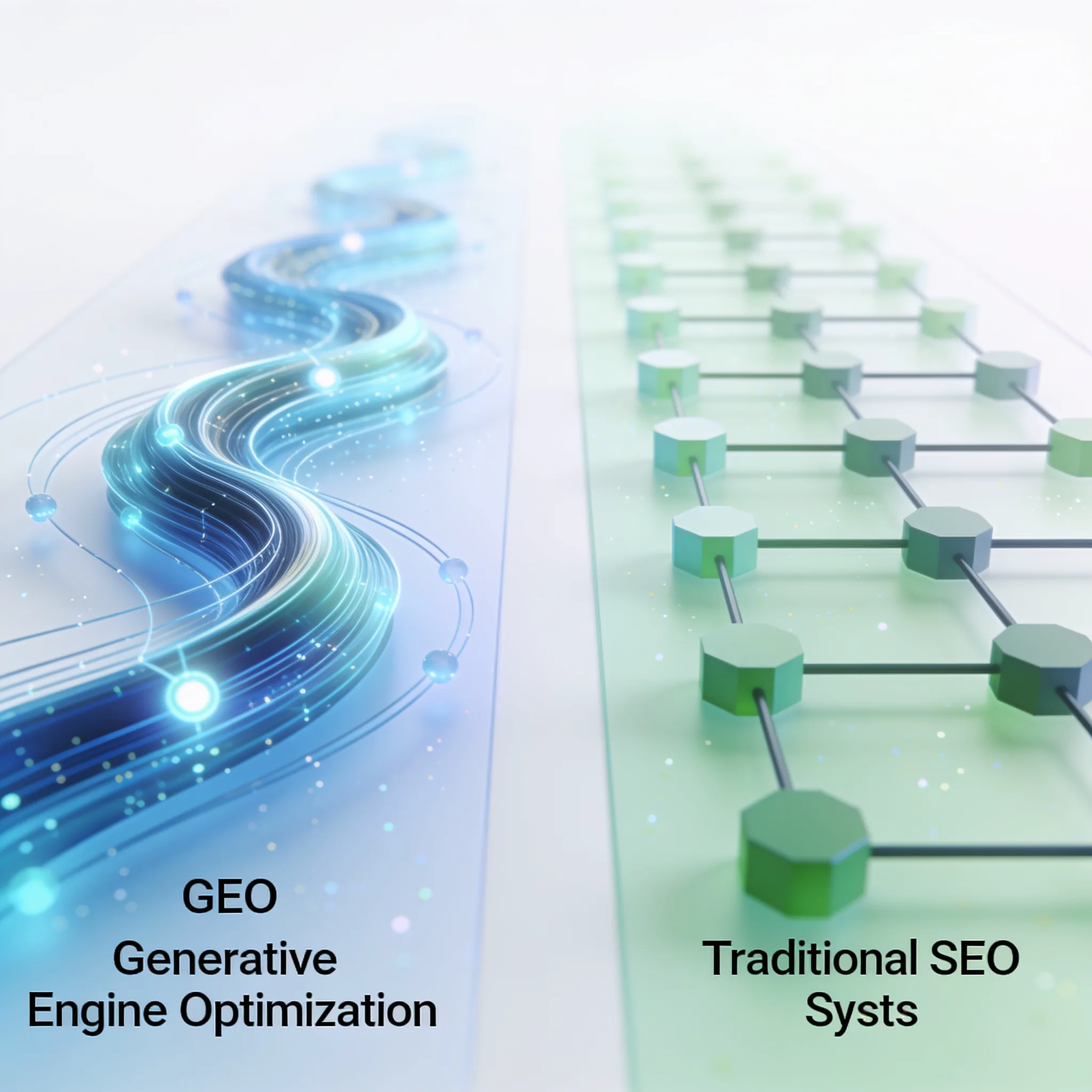
Generative Engine Optimization (GEO) is the practice of structuring content specifically to be cited by AI search engines like ChatGPT and Perplexity. The best ai tools for search engine optimization must bridge traditional ranking factors with AI citation requirements, because traditional SEO relies heavily on keyword density while GEO prioritizes logical structure and benchmark data. Your URL structure also matters.
AI models prefer accessible, structured data over PDFs hidden behind forms.
| SEO Factor | Traditional SEO Focus | GEO / AI Citation Focus |
|---|---|---|
| Content Type | Keyword-rich pages | Pages with benchmark data |
| URL Structure | Exact match domains | '/guide/' path segments |
| User Reviews | Star ratings | Text-based review content |
Find out what ChatGPT says about you before your next buyer does.
Free, no account. The paid audit is $490 and takes 3-5 business days.
Frequently Asked Questions
